Official development blog
[ Latest Cogmind Release Notes: Feb 2026, "Unchained More" ]

Year 8 of the Cogmind

Cogmind is now in its 9th year of continuous development, so as usual let’s take a look at the past year of progress in yet another annual review!

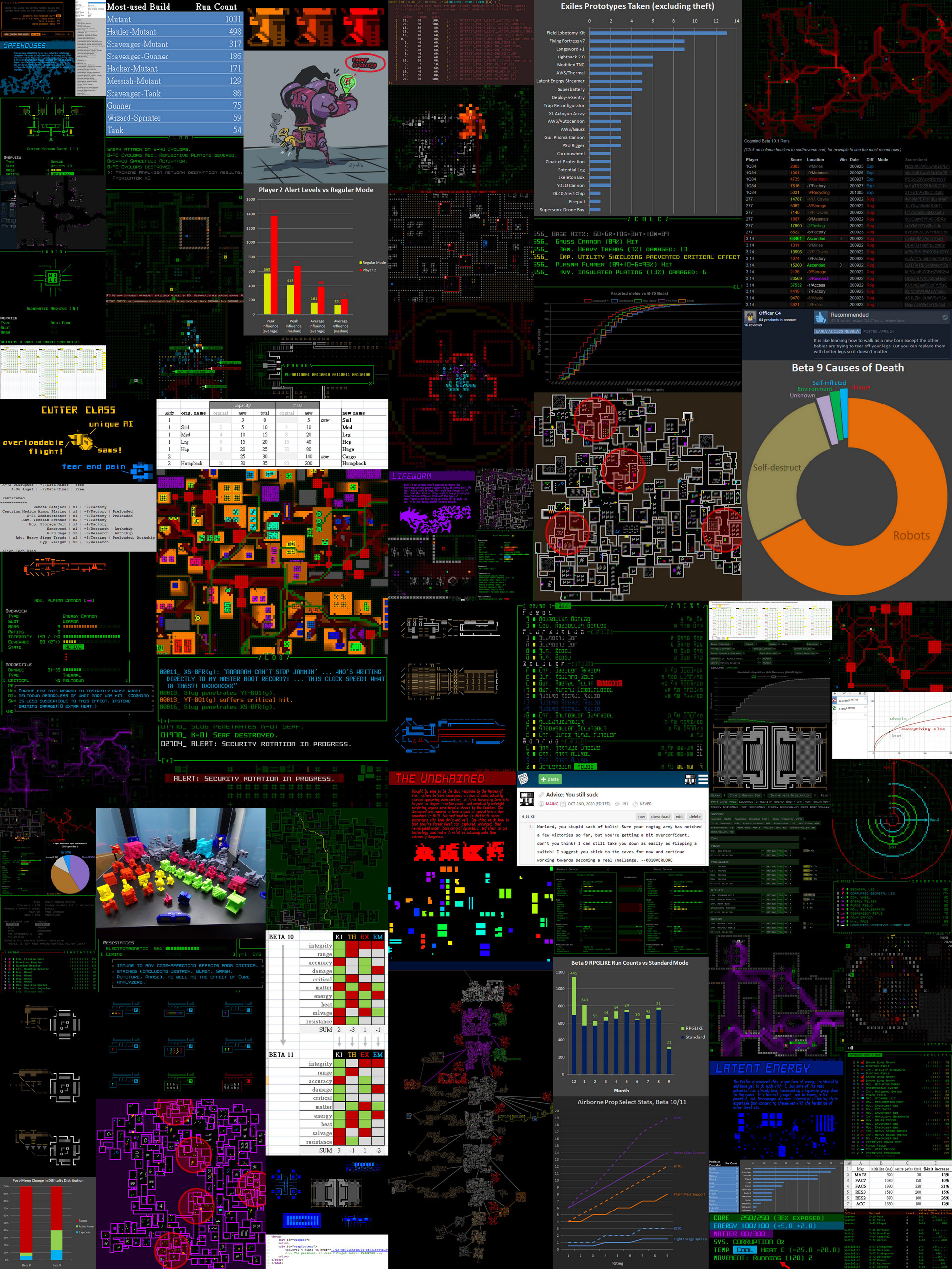
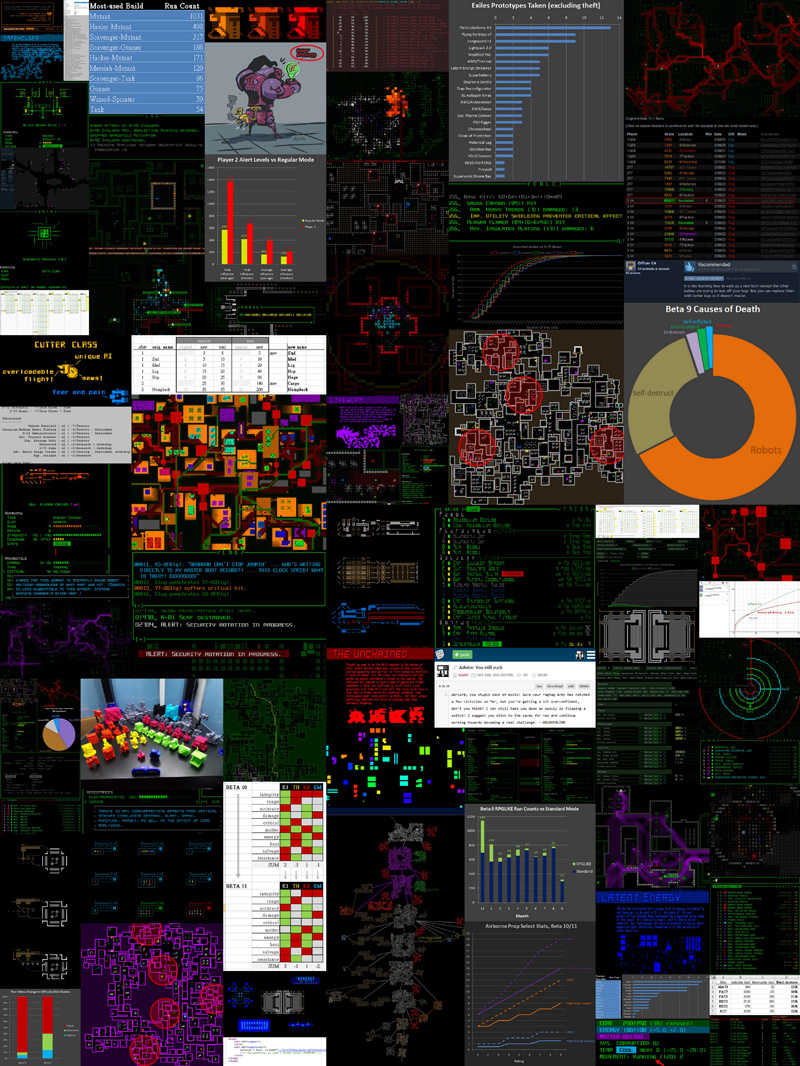
Although most of the feature progress I share is in the form of animated gifs, there are a handful of static PNGs as well which I’ve compiled into another collage for a visual overview of 2021:

cogmind_development_year_8_small

Selection of images from the past year of Cogmind-related development as posted on this blog, forums, and Twitter (larger size here).

Development Time

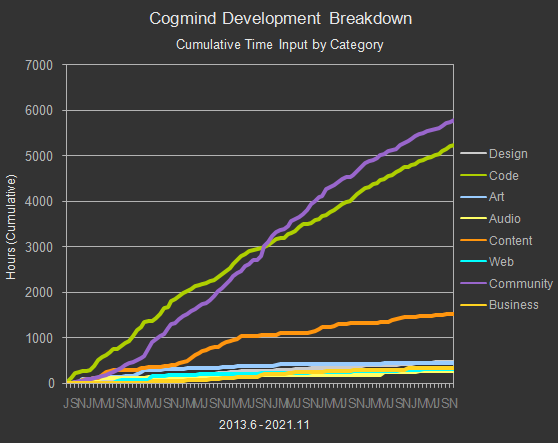
Hourly recording of dev work continues as usual, and the trajectory is similar to last year with more time put towards coding and work on the game itself as opposed to community-facing marketing-type stuff (an angle made easier by the lack of public releases, but we’ll get to that later :P). I’ve been a lot less interested in getting the word out and would rather focus on spending time with current players (the Roguelikes Discord is where we’re at!) and improving the game for those of us who are playing it.

That said, it’s still important to do some types of that outward-facing stuff which includes a lot of discussion and writing, so even at this rate I don’t really see, for example, Code overtaking Community in this graph for a long while :P

cogmind_cumulative_time_input_breakdown_201306-202111

A categorical breakdown of the hours that have been invested in Cogmind-related development over the years, through November 2021. (More data and details about each category will be shared at some point in the future during a comprehensive review of these records.)

Like 2020 there was a fair bit of extra time allocated to non-Cogmind-related roguelike community efforts (and therefore excluded from my tallies), such as the usual moderation, but also quite a lot of 7drl reviewing and streaming, and introducing and streaming other roguelikes.

I also took some time out in the middle of the year to try to bring in funding through other means, but without going into details let’s just say that didn’t pan out in the end (though it did unfortunately eat up that time xD). No matter, we have a growing patreon! (see further below)

Releases? Sorta :)

This is normally where I’d cover all the public releases from the year, but… yeah, in a rather anomalous development we didn’t have any aside from the quick AFD job back in April (it was released in tandem with this progress report, though there was no changelog or other description for it, as a sort of surprise since… all robots explode in dramatic fashion when destroyed :P).

2021 marks the first year in which Cogmind had no major public release, which if you’ve been following the blog (or checking out the occasional long-term progress announcements or my streams) will know is because the year has been spent working on the next huge iteration of the game along with patrons.

So 2021 is basically the year of Beta 11, in preparation for which there have already been eight major new versions (and other minor ones) released for testing since January, covering a variety of new and revamped systems as the whole of Beta 11 comes together. Development has been going pretty smoothly and I hope to have it out some time within the next few months.

While the year has been a special one in Cogmind history for being entirely devoted to laying the groundwork for a great 2022, this is not only in the sense that a game-changing Beta 11 is well on its way to completion…

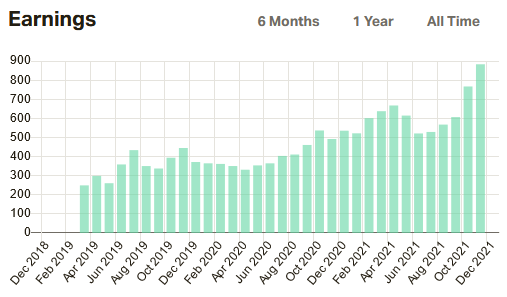
For one, support via Patreon has really come into its own! The numbers don’t lie.

kyzrati_patreon_earnings_history_2019-2021

Patreon earnings data, 2019-2021, straight from the dashboard.

Having reached and maintained the level I set for funding “the Unchained,” guess what Beta 12 will be bringing in 2022 :D. That’s one of the potential mini-factions which I haven’t really talked much about, though they were given a bit more color as part of last year’s Forbidden Lore ARG (search the walkthrough for the keyword “unchained”).

The financial support is great since it means development can continue without selling DLC or expansions etc., which put more awkward pressure on the design and are something I’ve always wanted to avoid even though it would technically mean more revenue. Having a better and more cohesive experience is more important to me, and I’m sure is more appreciated by players as well.

Speaking of thresholds, not too long ago Cogmind’s Steam review count finally reached the goal I set two years ago (800 while maintaining an OP rating), and that means we also even have a roadmap for next year’s Beta 13! It will feature yet another faction, this one hailing from a new Derelict community currently dubbed “Scraptown” (a code name subject to change once implementation begins). I also gave the concept a little more color in the ARG (search for that keyword in the walkthrough), but still mostly teaser material rather than specific mechanical details or lore implications. (Noticing a trend yet? That ARG is full of concepts that could easily find their way onto Tau Ceti IV some day…)

Seeing as we’ve already got an extended roadmap laid out (remember there’s also the Merchants Guild to come in a bigger expansion, too!), I’m not setting a new review threshold for now, but keep ’em coming since it’s good for the future of the game :D

Community

One could say 2021 has been a very big year for third-party releases by the player community :)

Although I’ve already mentioned some of them in previous progress updates, it’s worth highlighting the major projects here again as well since they’re new this year and forming an important part of the experience for players that make use of them.

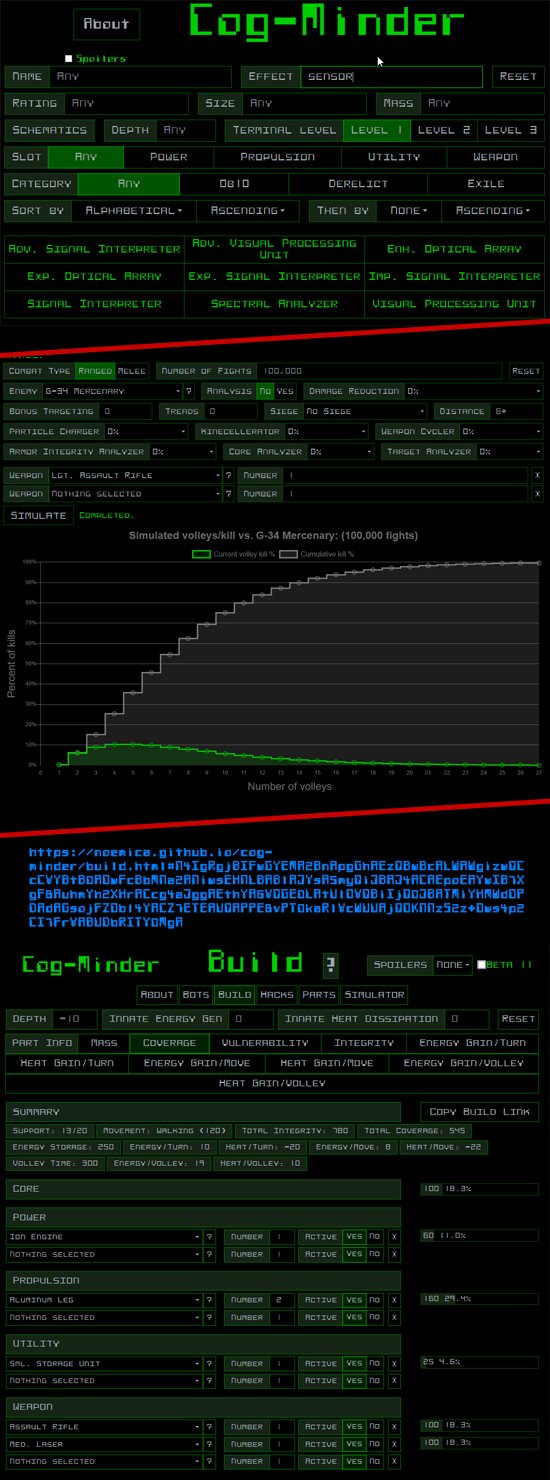
Cog-minder by aoemica is a great resource with a filterable item database, build theorycrafting, combat simulator, and more. It’s still getting occasional fixes and updates, but is a very useful tool if you want to plan out how to take your game to the next level.

cogmind_aoemica_cog-minder_feature_composite

Visual summary of some of Cog-minder’s primary features.

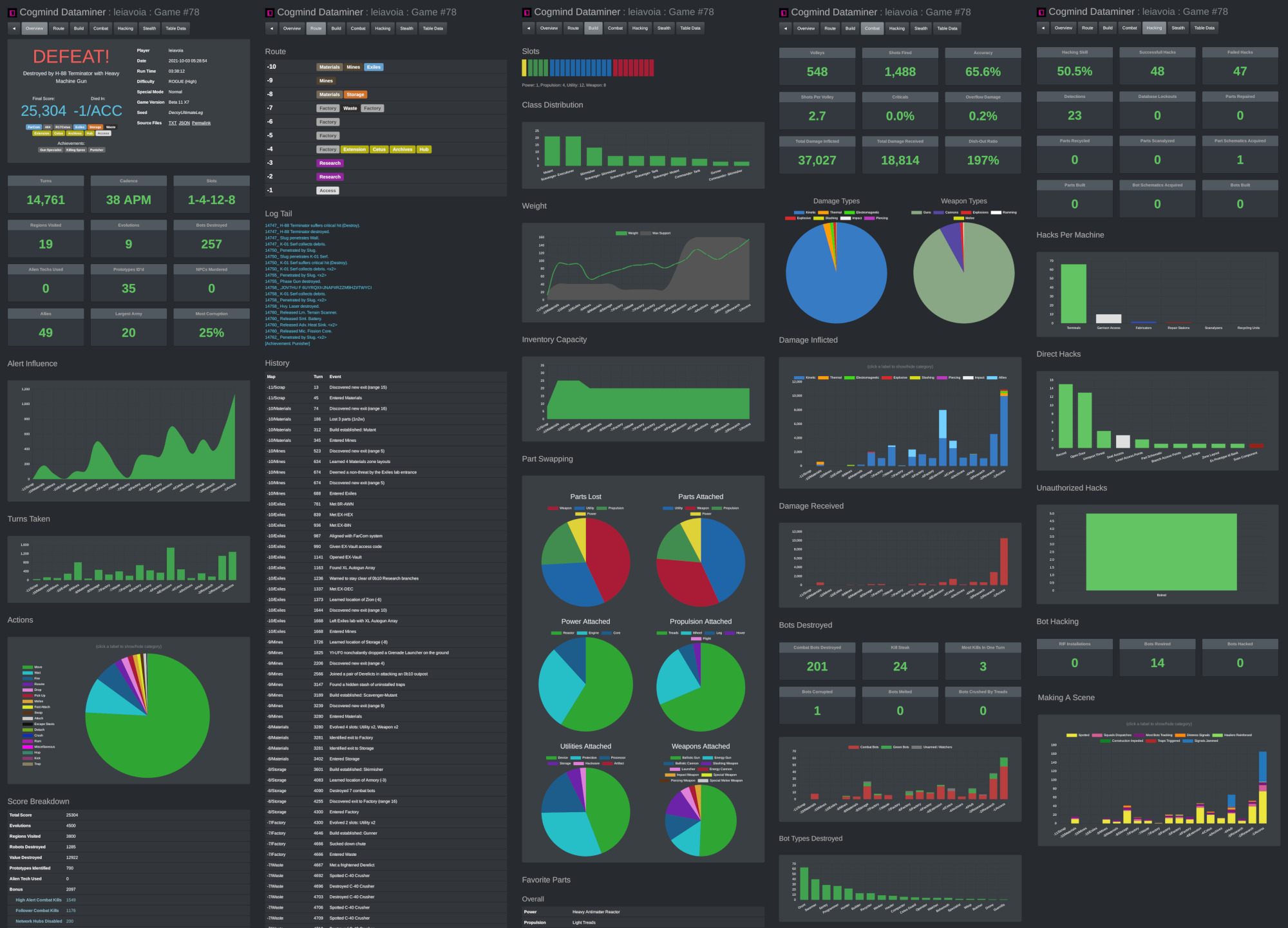
Dataminer by leiavoia takes advantage of the large amount of run data collected by Cogmind from players who opt into the leaderboard systems in order to present you with a huge range of graphs summarizing each run, even including unique forms of analysis. (Dataminer is also still expanding with new features.)

Dataminer stat samples by leiavoia

High-level overview of some of Dataminer’s run stat features. Direct links to Dataminer processing have also been added to the run database.

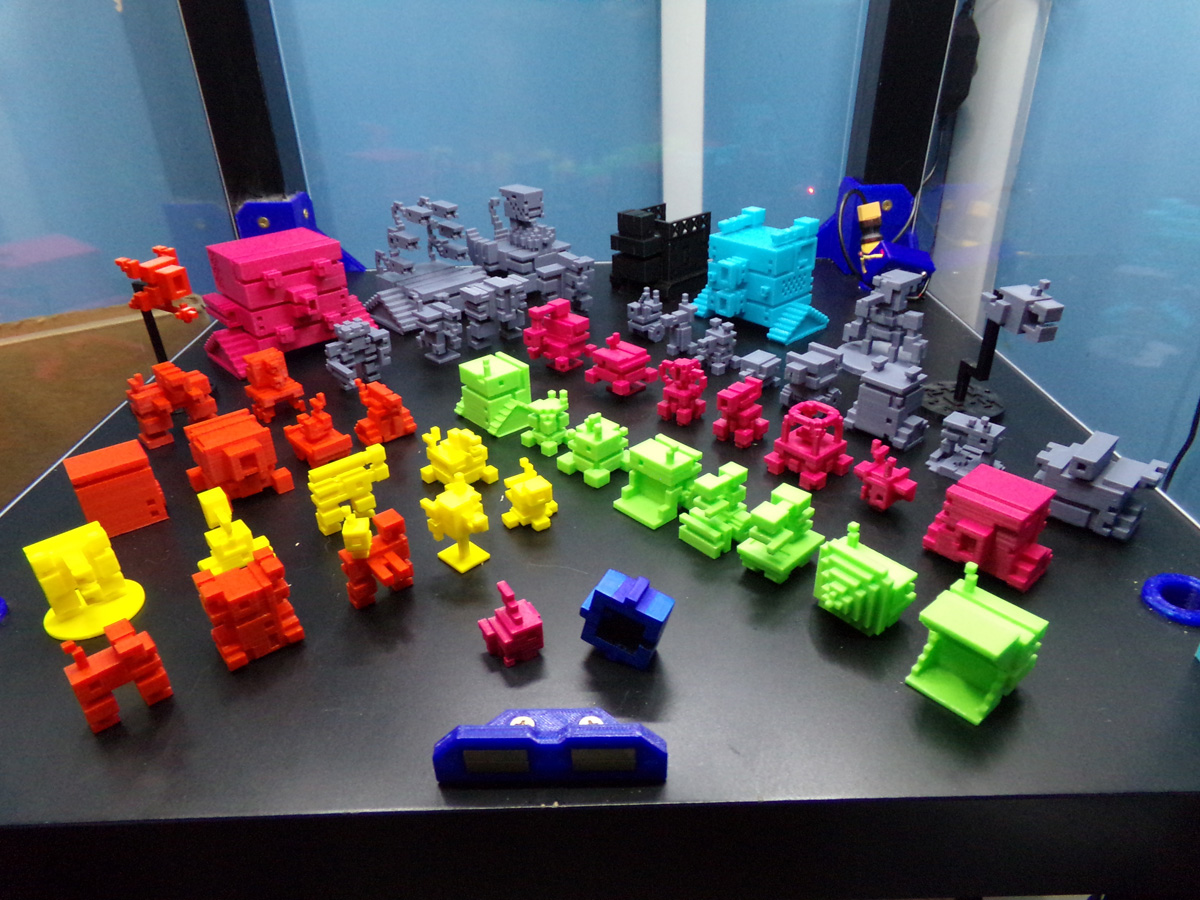
Runia’s 3D-printed bots based on Cogmind’s tileset both look great and are also for sale if you’d like your own. (Runia can be found on our Discord.) It’s been fun watching these come to life over the year as Runia discovered more of them in game :D

cogmind_runia_3D_print_samples_210717

A partial set of completed 3D-printed models from Cogmind, by Runia.

Also it wasn’t for everyone, but I did actually create a special one-time event for two of Cogmind’s streamers who were playing together earlier this year, Tone and MTF, and many of the core players hung out in those streams (or later watched the videos) to do a sort of “stream-only ARG,” basically unique content only for that one run which filled in a bit of hidden lore that no players had uncovered in last year’s ARG. I’m quite happy with out that turned out, and Tone archived the run on YouTube if you’d like to check it out, with the first video here:

A big <3 to the great Cogmind community, which really helps keep me (and this project) going.

I won’t post a screenshot this year, but if you’ve got a moment there’s some days remaining to vote for Cogmind over on IndieDB. Always nice to make it in their Top 100 list for a little extra exposure when that comes out (and then not bother competing for the top 10 because those games have much larger communities--but we can manage Top 100). Update 211211: Aaaaannd we’re in the Top 100! :D

2022

Normally I’d end with a little talk about our roadmap, but this year being special and all I seem to have already covered that above, since what happened this year has played an integral role in confirming what’s to come.

In summary, we should see Beta 11 in all its glory released within the next few months, followed by Betas 12 and 13 each with a new faction and mechanics, coming much more quickly than what you’ve seen with Beta 11 xD

I also have at least one major event in the planning stages (promise it’ll blow your Cog-mind), but I’m currently imagining that’ll be further out beyond these releases. We’ll possibly have some other smaller ones during the year as well, depending on how the release schedule aligns with other factors.

Posted in Annual Review | Tagged , , , | 6 Responses

Design Overhaul 4: Fabrication 2.0

The updates to Cogmind’s fabrication system aren’t exactly an “overhaul” to the extent seen with our other Beta 11 modifications in this series, and not like the one back in 2016 when the process was greatly simplified from its original early alpha form. As you’ll see this is more of a rebalancing, though it does make several important changes including the introduction of a new mechanic and type of part to go along with it, affecting the overall feel and accessibility of fabrication for different builds.

Fabrication is an interesting topic in the context of Cogmind because adapting your build based on what you find and salvage is a major part of the experience, and yet here is a system outside that process with the potential to enable the tightest level of control over your build. So naturally I’ve always wanted to limit the amount of fabrication possible across a run, but just how to best limit it has been in flux.

Prior to the changes in Beta 11, fabrication has been fairly tightly coupled to machine hacking capabilities. That is, with enough hackware you could pretty easily both get the schematics you want and build them at one or more Fabricators to significantly flesh out a build. Moreover, builds capable of this approach (fast/evasive/intel-oriented builds) are less likely to lose parts to begin with, making it easier to coast along with a very stable build. Now I don’t want to completely remove this strategy--it can certainly be an interesting way to play, with its own challenges, but I believe it should be a little harder to execute than what we’ve seen so far.

Limitations

For a long while the main global limitation on fabrication involved the map-wide “central matter system,” which contributed the matter required to build parts or robots at a Fabricator. The system’s matter would be replenished at various intervals, and the more matter drained by unauthorized player-initiated builds relative to the amount of matter remaining in the system, the more likely to be discovered and have the entire system shut down permanently (as far as the player’s time on the map is concerned).

So the rate of fabrication depended on the matter costs of building a given set of schematics vs the rate of replenishment, while being able to build anything at all was contingent on not being discovered (which would always happen eventually, but involved a fair bit of randomness--sometimes very quick, other times allowing for many parts or robots to be built).

I do like the idea of central systems that can be hooked into other pieces of the content, as these are the sort of connections that really help bring a world to life, but aside from the disabling of matter-related machines reducing the reserves available for fabrication across the map (a fairly opaque connection, to say the least), there were no other links made here. Based on how many such mechanical or thematic connections there are elsewhere in the world, people kept assuming or hoping they could add matter to the system at Recycling Units by recycling parts, but for various reasons I didn’t want that to be a thing.

Beta 11 removes the central matter system entirely, and by extension there are no more map-wide lockouts. Certainly no big loss here, and players will be really happy with these changes, though of course I’m still going to want some limitations here, so what’ll it be…

The aforementioned hacker-fabber strategy remains largely intact, but hackers now have a one-build-per-Fabricator limit, because as soon as an unauthorized build is initiated, that machine is locked (but will still finish the job) and an investigation squad is sent to the area. This latter element will add an extra challenge to obtaining parts/allies this way by eventually increasing the number of local hostiles, though both finding more Fabricators (to perform more builds) and evading, distracting, or recalling the investigation(s) are feats well within a hacker’s area of expertise.

Based on what I’ve seen in player runs, and the way the numbers balance out, this change will ultimately have a relatively minimal impact on what is possible for hacker-fabbers to achieve (though again there might be some extra challenge involved). While under the central matter system it was nice that there could be a bit of a choice in there with regard to pushing for faster fabrication at the cost of a higher risk of discovery, by design that system was fairly opaque and therefore difficult to strategize around. By comparison, this newer system is reliably consistent with clear consequences, which is generally preferable with an extensive central system like this.

(It’s also worth noting here that the “preloaded schematic” mechanic remains intact, and building one does not count as an unauthorized build, so getting lucky with a good preloaded schematic you want is still a nice thing to find. Internally I even expanded that system as I’ll describe later.)

So hackers can now enjoy the removal of global rate limitations, and more predictable fabrication potential rather than sudden complete lockouts after a single build or two, but this update is about much more than that, because in addition to increasing reliability while reducing some of the potential for excessive fabrication by hackers, non-hackers are also getting a new way to reliably fabricate something via *gasp* a new consumable!

Authchips

Fabricators don’t need to be a resource limited to hackers (or anyone who happens across a lucky preloaded schematic)--why not include another option for accessing them which different build styles can also take advantage of? I’ve generally tried to avoid consumables in Cogmind (and written as much about it before), but as with Relay Couplers I believe there’s room here for a new tool and limiting factor in terms of how non-hackers can utilize Fabricators.

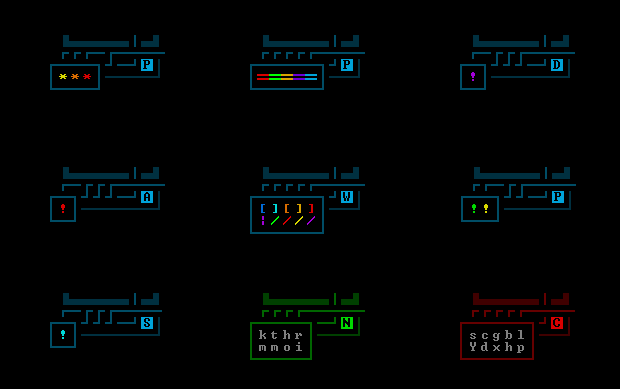
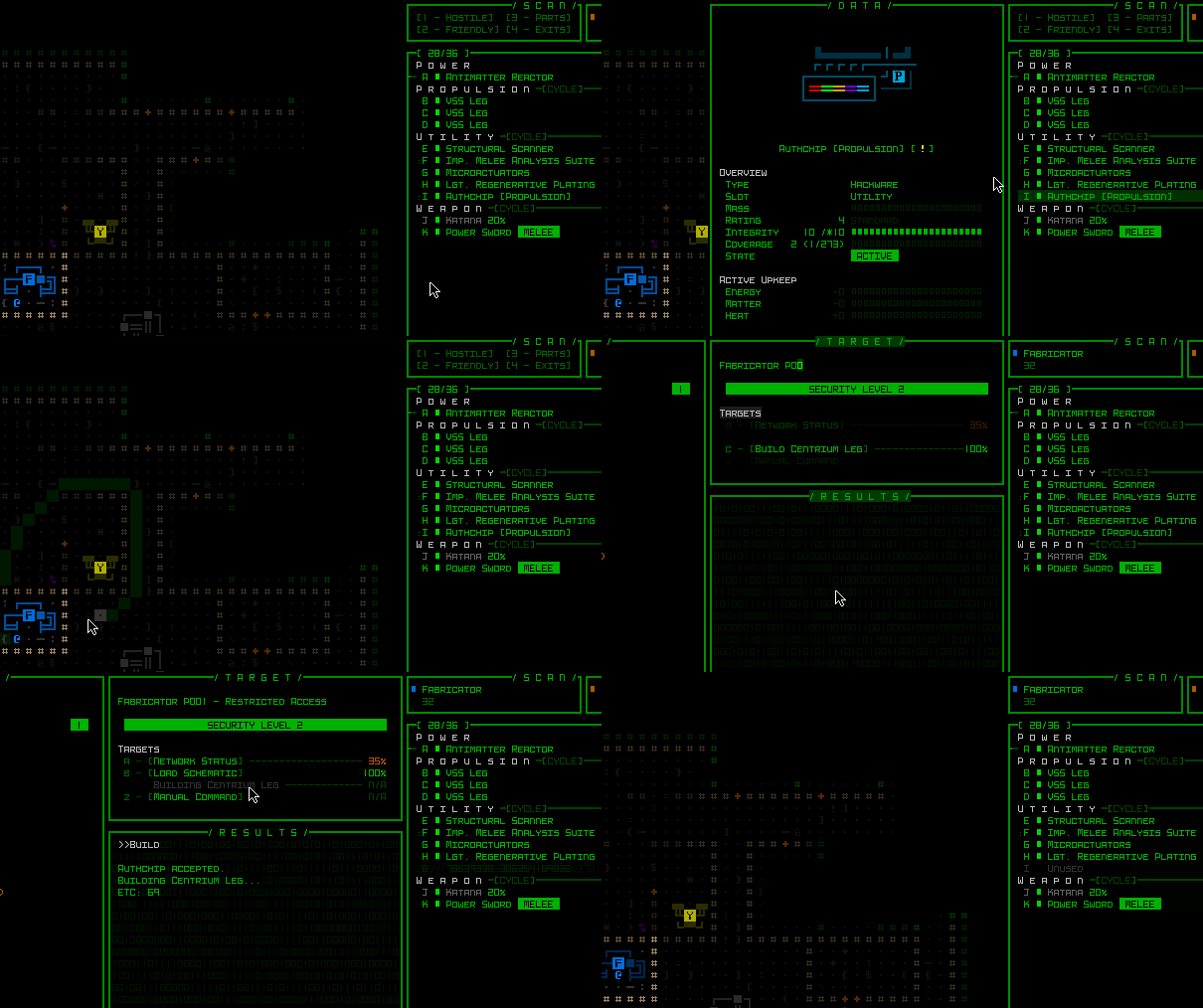
“Authchips” are a new type of consumable item that can each be used once to load and build a single schematic. Success is guaranteed, and using one does not cause any detection, tracing, or other negative side effects. There being no explicit central matter system anymore, and no more lockouts, Authchips essentially allow for otherwise unlimited and safe fabrication so long as one has the necessary chips.

cogmind_ascii_art_beta11_authchips

Authchips!

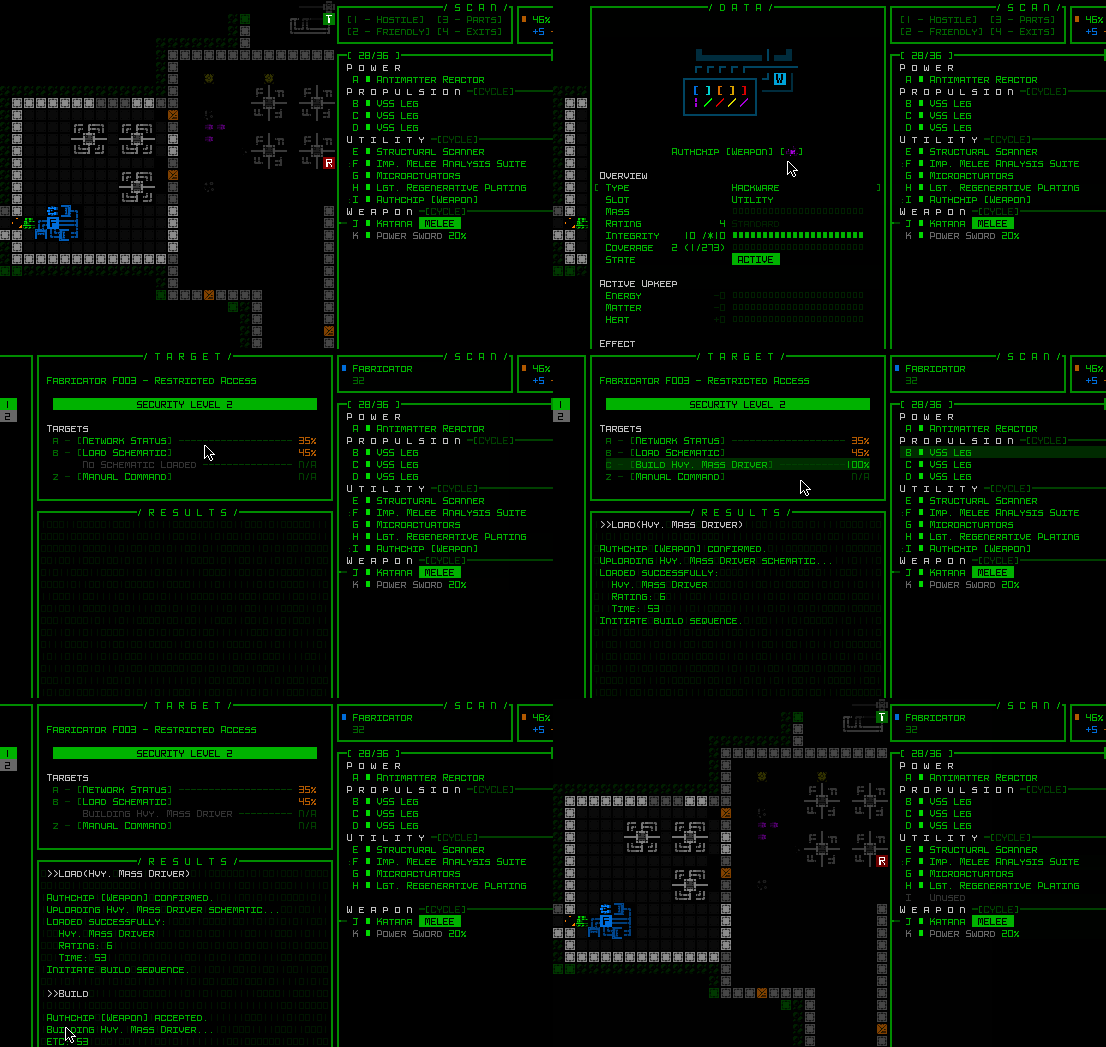
Technically an Authchip must be attached in order to use it for fabrication, a requirement which allows for them to come with corruption as a possible drawback, while more importantly also making this feature compatible with the UI in that by attaching an Authchip of a given type, it can be assumed the intent is to use the Authchip rather than attempting to hack the target instead (there is no explicit choice available via the Fabricator interface).

cogmind_fabrication_via_authchip_demo1

An example of using an Authchip to immediately start building something that would otherwise be pretty tough in that situation (notice the special color and indicator in the schematics list).

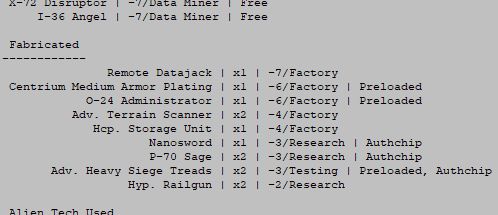
Scoresheets have also been updated to include Authchip indicators.

cogmind_scoresheet_fabrication_authchip_indicator

We can now also tell from scoresheets whether an Authchip was used for a given fabrication.

Balance Factors

Obviously with success at a Fabricator guaranteed and without consequences, Authchip design needs to rely on other factors to ensure balance.

First and foremost is acquisition, or how and whether the player can obtain Authchips to begin with. On this front I added quite a few sources, but admittedly almost none of them are guaranteed. This is more in line with Cogmind’s philosophy of “I have found this interesting new option, should I take advantage of it?” over “I have a very specific plan and am going to execute it to a tee.” The former is much more roguelike in spirit. Two of the Authchip sources are guaranteed, but each of those comes with its own drawbacks and is therefore not necessarily something everyone would want or even be able to do. Instead the general idea is that players may randomly encounter one of the many different possible Authchip sources and have to decide then and there whether they have (or will seek out) a desirable schematic and want to allocate the required inventory space until they reach a Fabricator. (Update: I’ve since written about the primary guaranteed Authchip source, DSFs.)

A second balance factor likely apparent from the earlier demo gif is that “Authchip” is not a single item, but a group of items which each apply to different part categories, as with Relay Couplers indicating their relevant category in brackets. The main issue with consumables (and basically any non-part item) revolves around making sure they’re worth the slot requirement and/or inventory space compared to whatever else they might be displacing. Based on their intended frequency, allowing a single Authchip to build any schematic whatsoever would have far too much versatility for the goal I’m aiming for, but fully splitting them into a 1:1 ratio with item types would be excessively limiting, so I’ve chosen a middle path that divides them by slot type while further subdividing utilities (the bulk of Cogmind items) into four main categories, giving us Authchips for Storage, Devices, Processors, and Armor in addition to the slot-based Power, Propulsion, Weapons. Robots, mostly a sideshow when it comes to discussing fabrication so I haven’t been mentioning them much so far, simply add two more types of chips, Combat and NC (non-combat, using the same abbreviation found on couplers).

cogmind_fabrication_via_authchip_demo2

Another Authchip fabrication demo, this one of the [Propulsion] type.

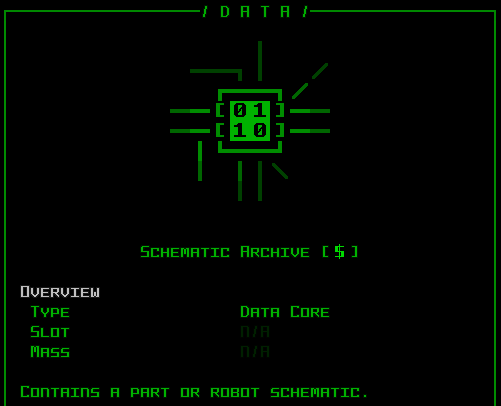
The third balance factor is of course schematics! It doesn’t help to have the “right” Authchip without a schematic to use it on. Hackers aiming for fabrication are at an advantage here since they’ll have a wider variety of schematics to choose from earlier on, though it’s not too hard for even non-hackers to hack up a smaller number of useful schematics, or maybe find some random but potentially useful direct schematics at Terminals, or more likely acquire free schematics from NPCs. On the latter part I also added support for prefab-scripted Terminals to include procedurally-selected schematics, whereas before any Terminals with schematics were static, or at best chosen randomly from a list I compiled manually, so now there’ll be more variety in some prefab locations and therefore a greater chance to get something interesting or useful for different builds. I also applied that schematic generation code to a new item, the Schematic Archive, a collectable data item containing a random schematic which is learned on picking it up. There aren’t many places to find these yet, but the item and foundation is there. Yet more ways to acquire schematics will be added in the future (very likely related to Merchants).

cogmind_schematic_archive_item_info

Someone in Zion probably owns a lot of these.

The nice thing here is that new strategies and tradeoffs will appear now that technically any build has access to Fabricator use assuming they have the schematic and can acquire Authchips, at least any build willing to temporarily sacrifice inventory for the promise of being able to eventually build something neat later (there are no rating limits on what can be built at any Fabricator, so it really is all about getting the desired schematic).

Complex-initiated Fabrication

Complex 0b10’s Fabricators weren’t installed as a friendly gesture to intruders. They’re of course one of the main sources of Unaware robots and parts, albeit mostly built at some time prior to your own arrival (or after your departure). Still, this being a living world it’s nice to see evidence of it actually happening, so for a long while now Fabricators have actually been able to produce things, where any parts built are picked up by a Hauler which takes them from the map, or any combat robots built head off to report to a Garrison. It’s not incredibly common, plus it could can happen at any Fabricator on the map, so the chances of coming across it are not all that high, but it does happen.

Now in the past the implementation of this feature took the easy route (as rare low-impact content tends to do if it won’t make much difference), with simply a small random chance each turn that a random Fabricator somewhere on the map would suddenly spit something out as described above. The problem with this approach is that internally it didn’t follow the normal fabrication rules, in that there’s no real production process, nor is the proper schematic even loaded on that machine--it just… happened.

Not a big deal before since this behavior was mostly fluff, but along with the fabrication system changes, it turns out we needed to remove or replace some hacks, since the matter-related stuff from before no longer applied. When updating content, wherever possible I prefer replacement over removal, as this helps feature modifications either increase the amount of content or at least keep it stable, and also forces a bit of creativity (“what would this feature do instead under this scenario?”) which can have unexpected and fun results!

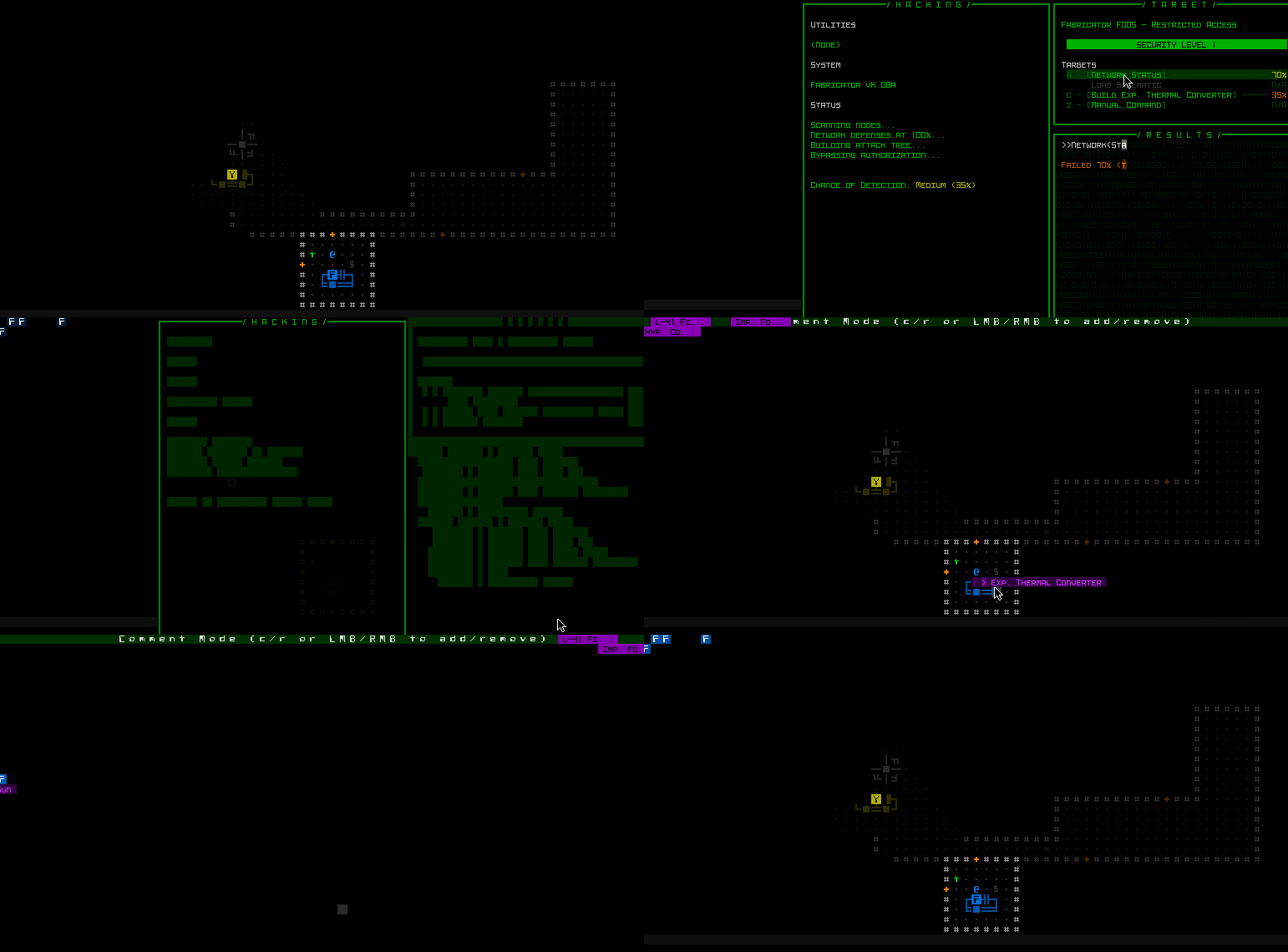
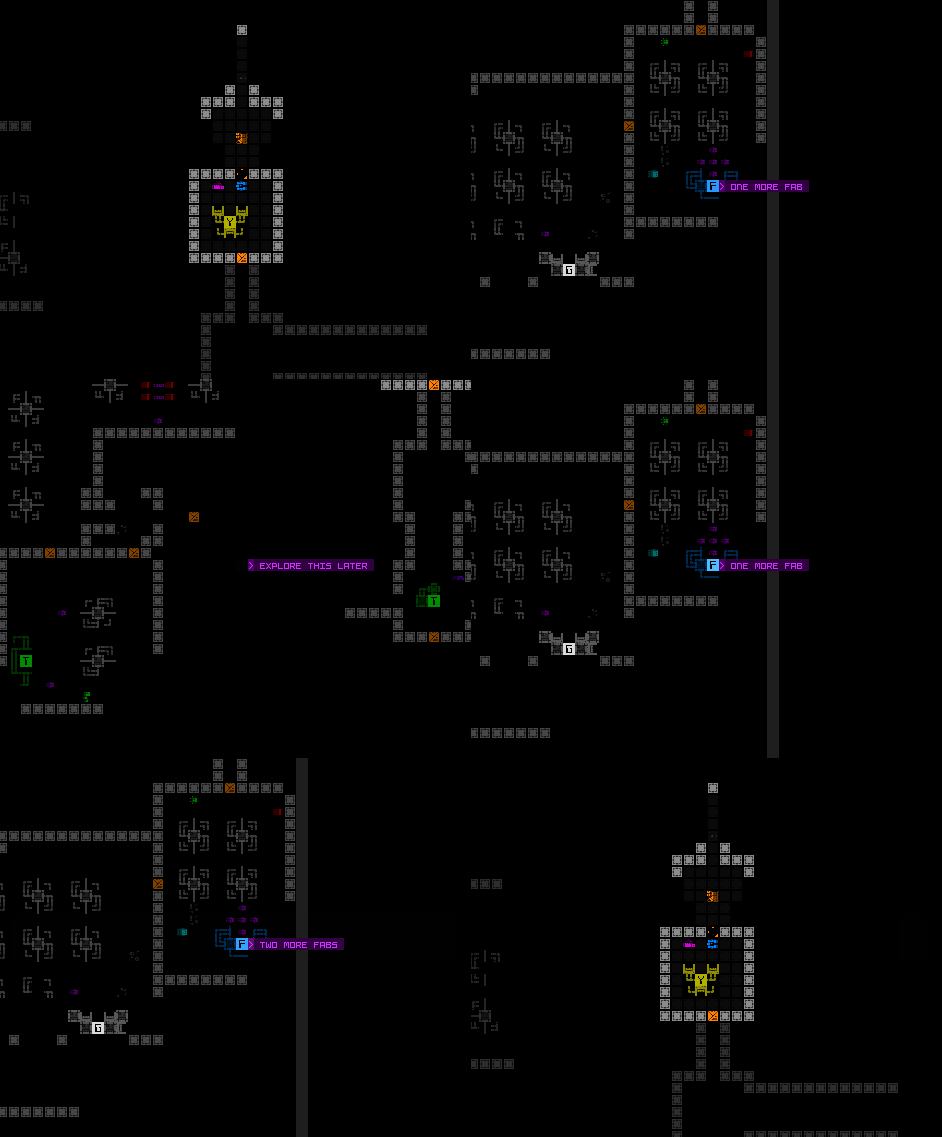
A Fabricator’s Network(Status) command/hack was originally meant as an easy way to check on the current central matter reserves, but instead of removing it, what better new purpose than to tell you what all the Fabricators are really up to? …If only the Complex actually knew :P

Fortunately with a fabrication rework comes more time to focus on the system and a greater desire to expand and perfect it, so 0b10 will now preload schematics for what it’s planning to build, actually puts in the time required to do so, and Network(Status) reports the details.

cogmind_fabricator_network_status_preloaded_schematics_automated_map_comments

Network(Status) effect under the new fabrication system.

In that gif above you’re also seeing a new purpose for the Map Comments feature: automated comments! It wouldn’t make much sense to give all this network status info if there wasn’t an easy way to reference it. It’s the kind of information players would want to consider taking notes on, or add their own comments via that UI feature, but in any case we may as well just have all that happen automatically.

You can edit and remove these map comments as normal during comment editing. The system is also smart enough to automatically remove/update existing Fabricator comments if the situation has changed by the next time you run that hack.

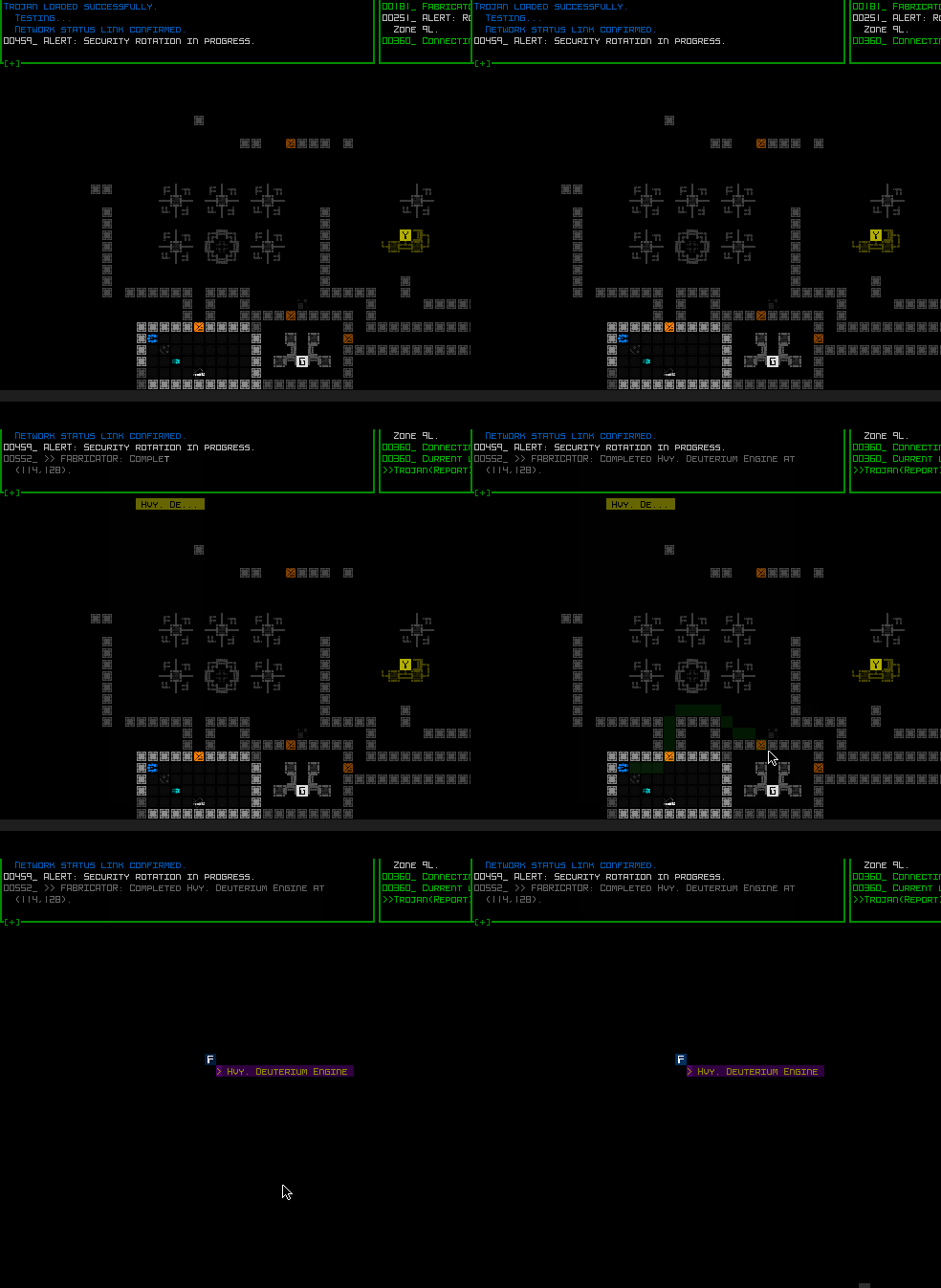
Similarly one of the Fabricator Trojans was given new functionality, which also makes use of automated map comments to report on fabrication processes in real time wherever you are.

cogmind_trojan_report_automated_map_comment

Real-time map-wide fabrication reporting adding automated comments to the map. As you can see here automated map comments in particular will appear in a different color to differentiate them from those you’ve added on your own (the Network(Status) gif further above was recorded before that change was made).

While expanding the system I also added a couple new Fabricator Trojans to discover for fun :D

Results

I started brainstorming changes to the fabrication system a year ago in reaction to lots of recurring player discussion on the topic, and more recently spent a couple months revisiting possible concepts a few times, sharing some of the process with patrons while refining it further each time.

The process was supposed to culminate in a “purely experimental” test release to see if this whole Authchip idea would work or if we might want to roll back any changes and continue looking for other systems. Things didn’t end up playing out that way because following that many refinements, and while eventually starting to implement the foundation, I started getting pretty confident that even if it wasn’t perfect, this design is close enough to the final state to warrant skipping the whole experiment idea and building it in full. So it’s here to stay.

Part of the reason for the late confidence was that the original concepts were more extreme, going as far as considering replacing Fabricator hacking with Authchips or other such heavy-handed requirement, but in the end as you can see the new system is more of a rebalanced and expanded version of what we had before, so a lot easier to predict the results of adding it to the game and I at least don’t see any negative consequences, per se.

The new system has been included in Beta 11 prerelease versions for some weeks at this point, however experience with these bits is still limited so I can’t actually comment on how successful it’s ultimately been. I did make a list of other factors that could be used to further tweak the balance if necessary, though I’m still confident at this point that over time this’ll work out.

Posted in Cogmind Beta Overhaul | Tagged , , | Leave a comment

Map Comments and Log Notes

Back in August I was watching the first Tone-MTF combo stream, and listening to them repeatedly strategize aloud so they could collaborate brought more than the usual planning talk to the forefront of the conversation, through which I noticed the occasional potential for manual map comments to be helpful.

Very few roguelikes support freely adding annotations to specific locations on the map, perhaps because most roguelikes don’t have very large maps anyway, or rely on other features like map memory to serve enough of that purpose (some roguelikes will even store old enemy position data in addition to items and other objects/environment features), or don’t allocate quite as many dev resources to non-essential UI features.

tggw_map_memory_creatures

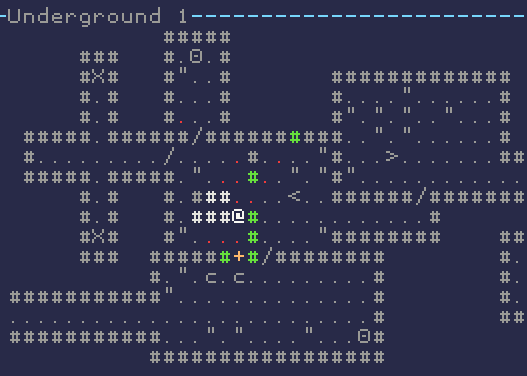
The Ground Gives Way remembering that a particular creature was left outside your FOV when you moved away, a simple way to let you know you avoided or fled from something in that area earlier. See the two ‘c’s to the south of the player (@), where ‘c’ represents a canine type creature. (Wild dogs are fast but can’t open doors so I used a rod of slowing on them then retreated to close the door.)

For a while on Patreon I had suggested map notes were a possibility for Cogmind, and although there was a fair bit of support for them among the player base, it wasn’t high compared to the desire for various other features. Some potential roguelike criteria to consider as far as the usefulness of map comments:

  • If backtracking to earlier maps is possible, players may need to remember some important local detail(s) long after they may have forgotten them due to having since interacted with many other subsequent maps and encounters.
  • If maps are large or complex enough, players may have a harder time remembering details about an area they might revisit later, or after saving and loading their game for another session.

There’s no backtracking to previous maps in Cogmind, so my personal preference is to avoid ending a session partway through a map if possible, to reduce the chance I’ll forget some important piece of information without having to make notes on everything. On that note, however, back in Beta 10 I did add “log notes” which can help with just such a situation. Compared to an interface feature like map comments, simply adding notes to the log is much easier to build :P

cogmind_player_log_note_demo

Adding a custom note to the log. Implementing this feature is as simple as calling up a dialogue box to accept a line of text and copying it to the log once confirmed.

In terms of temporarily preserving info as a reminder for later, log notes are similar to map notes but without the positional data, though as is these will of course also scroll away as the log progresses since they don’t have a separate dedicated display.

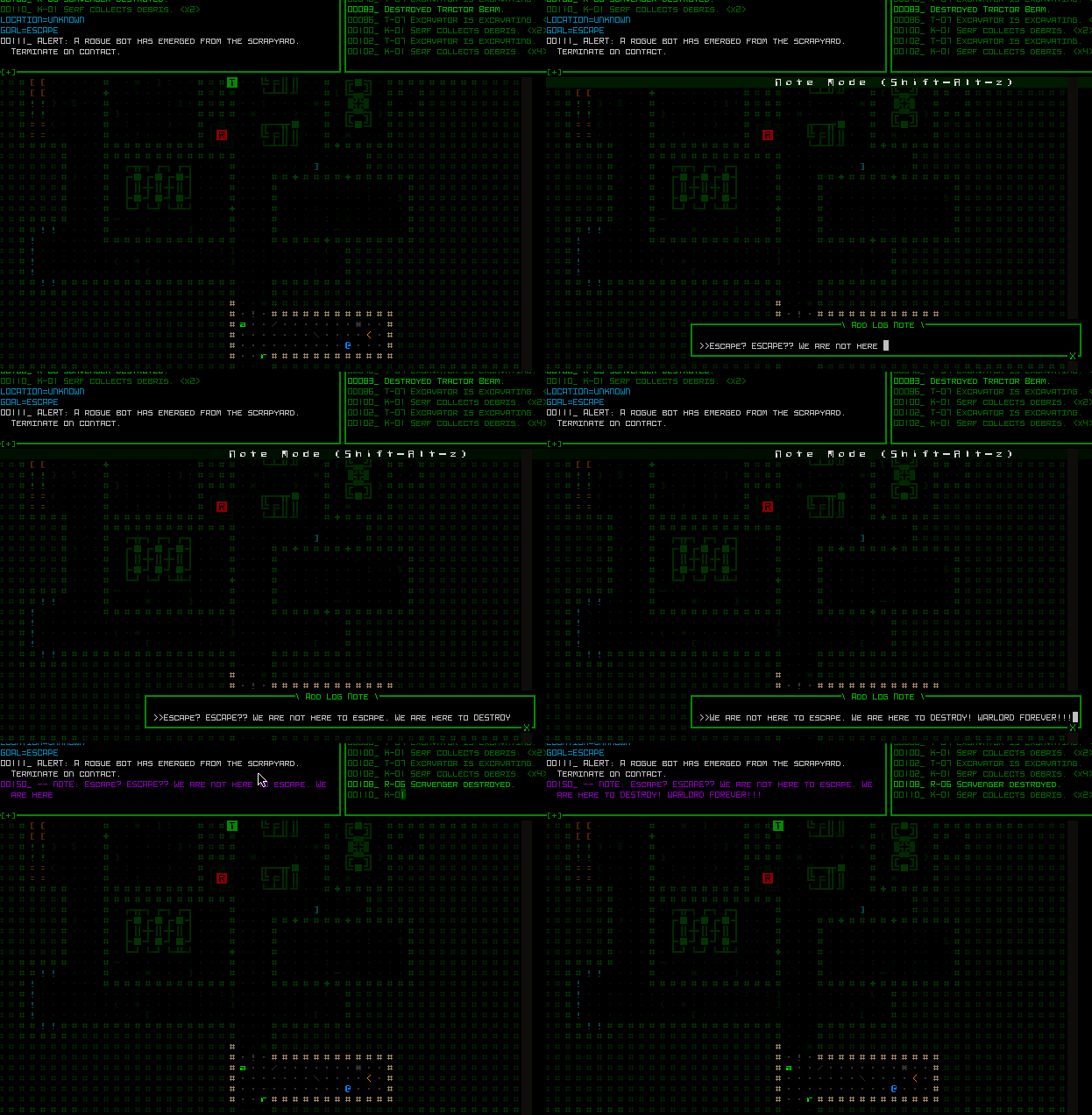
Log notes could also be used to add more explanation to the message log for those players who will export it in full at the end of their run, for example to describe in greater detail what was going on at the time (in fact this was the original reason one player requested it a long while back).

cogmind_streamer_break_log_note

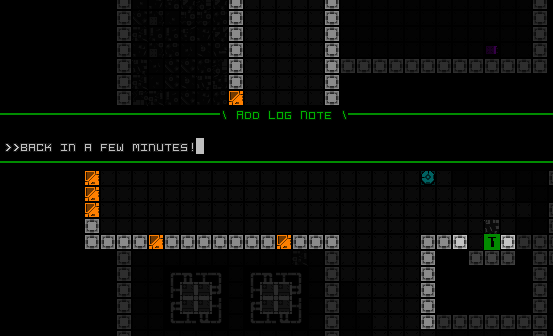
Interestingly, since the log notes functionality allows players to type a line of arbitrary text in the middle of the screen, some streamers have taken to using it as an in-theme way to write a message letting viewers know they’re away for a short break.

Back to the idea of map notes, although I one day finally decided to just add them on a whim for fun (I do rather enjoy taking dev detours to implement little interface QoL bits), I quickly discovered this was a complicated endeavor filled with potential for bugs and coming with plenty of UI challenges! You’ve got your typical data storage considerations, the need to write but also edit or delete existing comments associated with a particular location, a new modal interface to handle all this separately from the rest of the main UI, and visualization work involving showing the comments normally, or just reminders of the comment locations when not shown in full, or relative directions to comments to help pinpoint them across a larger map… All told, this feature ended up taking a week to complete.

Fortunately for the visual parts I eventually managed to get the comments piggybacking on the exit label system (including support for displaying relative direction of off-screen comments) rather than having to write a separate system, which would’ve taken even longer.

I will say that at first I didn’t really feel this system would be worth the amount of time invested in building it, but in the time since I’ve been discovering more uses (including automated ones) that have made it seem more worthwhile.

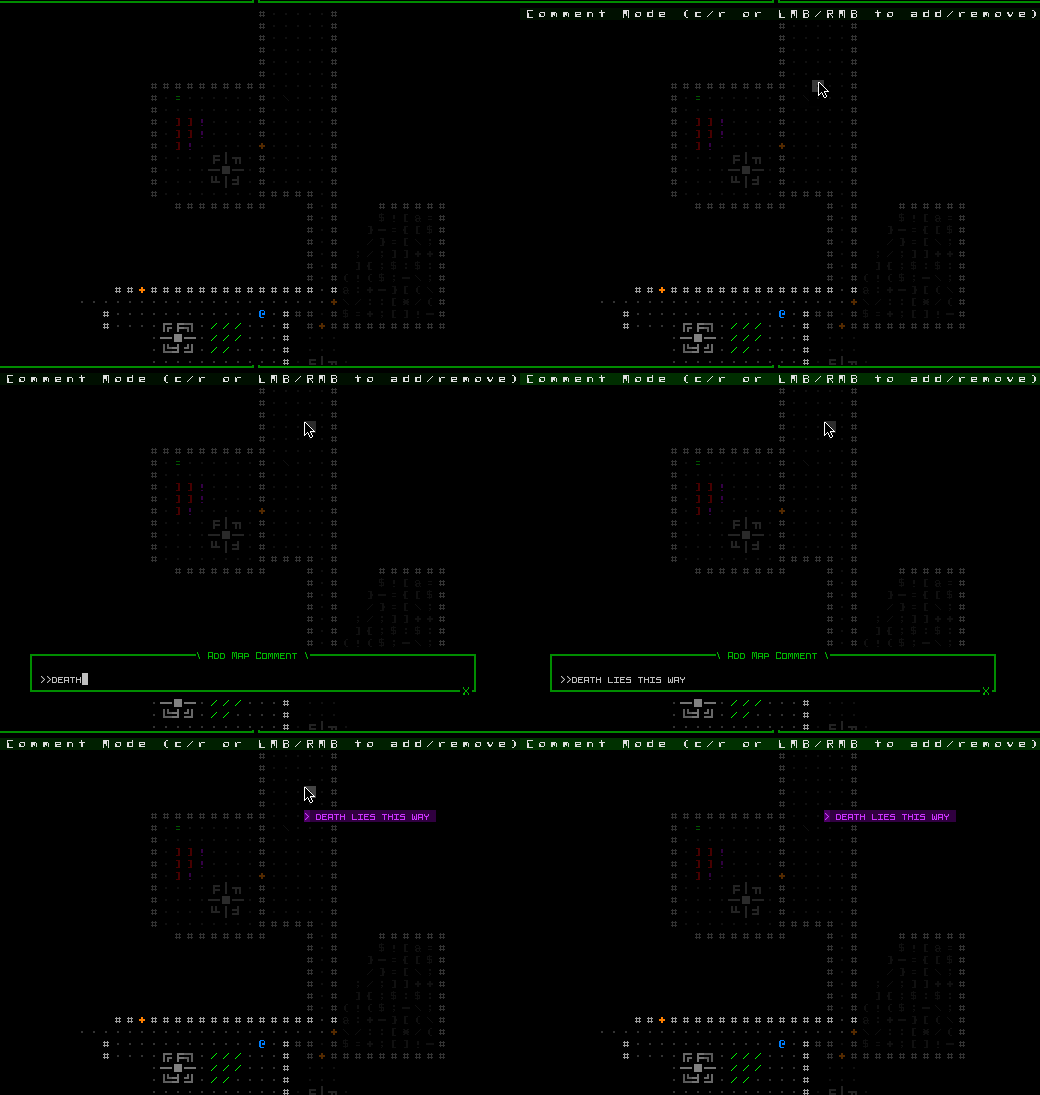
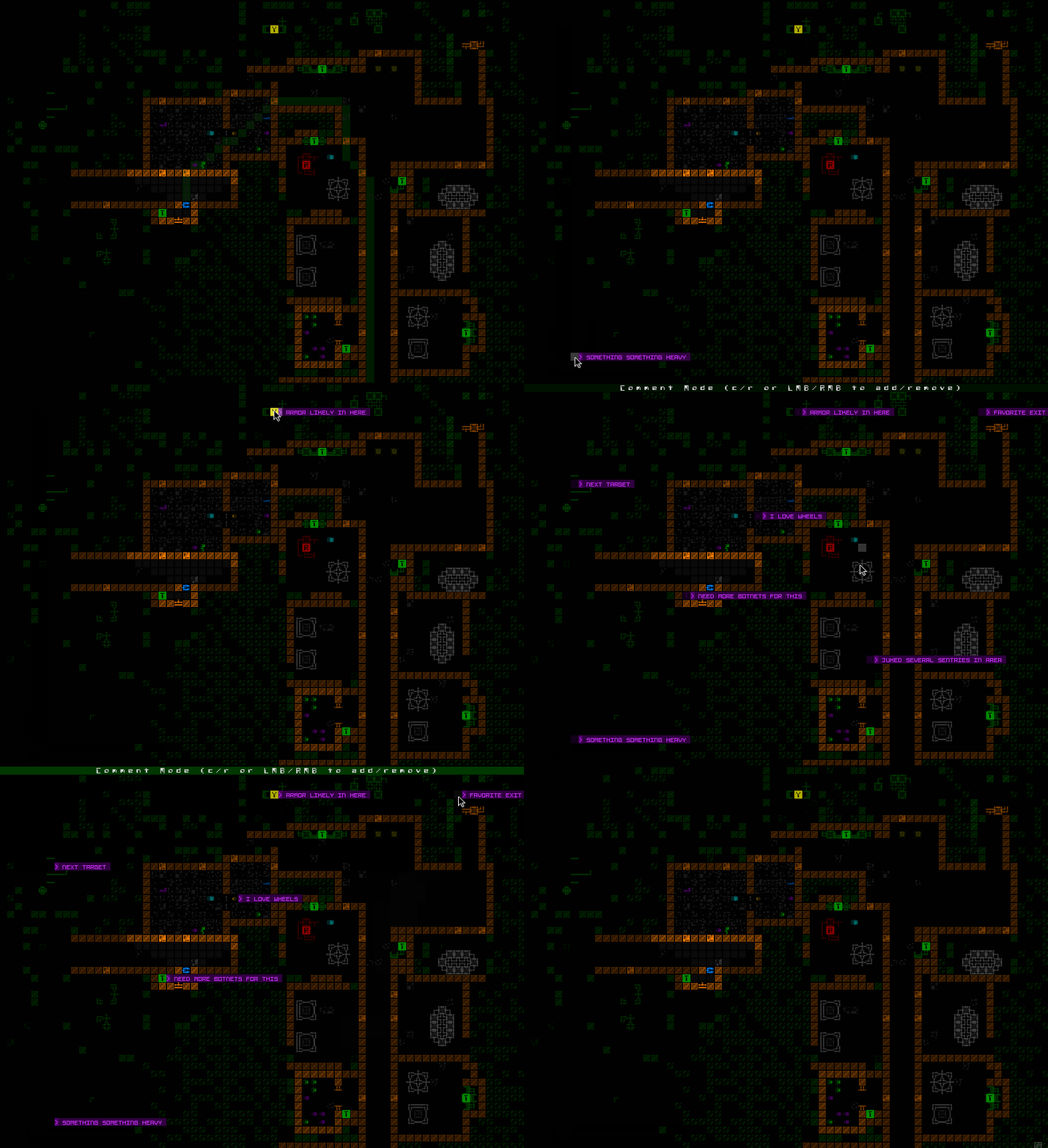
Map comments are added by entering “Comment Mode,” currently activated via Shift-Alt-c (but later also coming to the “special commands menu” in Beta 11 for easier access).

cogmind_map_comment_adding

Adding a comment to the map.

Even when not in the mode, the map view reminds players about comments made earlier by intermittently highlighting those cells (the interval is adjustable in the advanced options, or can even can be turned off entirely if it’s distracting). Hovering the mouse or keyboard cursor over a single comment position also shows that one comment in its entirety, but on entering the mode they all appear at once and remain visible as long as the mode is active. Right-clicking on an existing comment (or the ‘r’ key) removes it.

cogmind_map_comment_highlighting_showall_deleting

Highlighting individual comments, as well as showing them all and demonstrating individual removal.

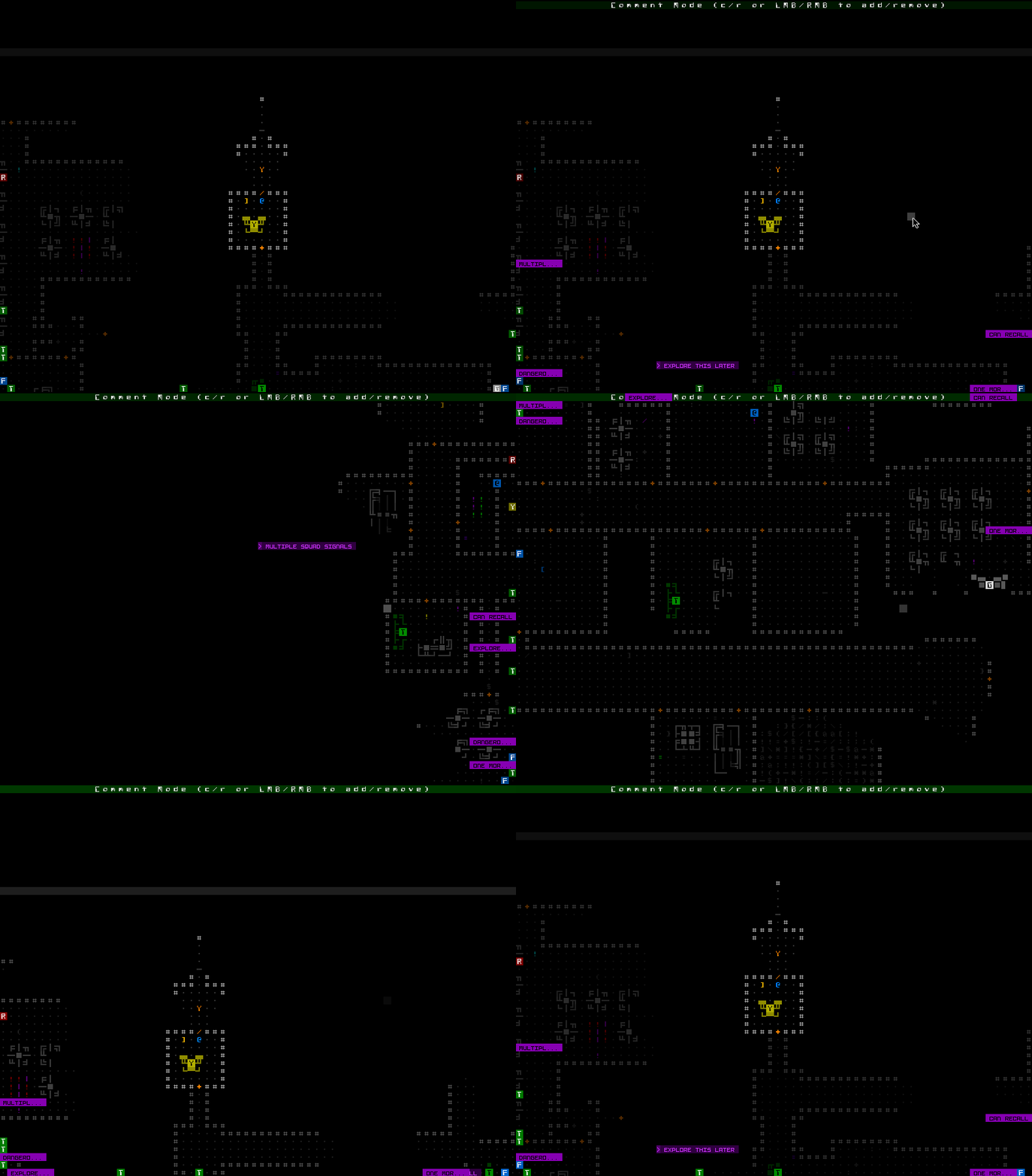
As with other on-map labels, of course we need support for showing indicators of those not currently within the map view area. This was where it came in extremely handy to already have lots of architecture in place for displaying directional labels.

cogmind_map_comment_offscreen

Demonstrating off-screen map comment markers.

Comment Mode also supports cycling through existing comments via Tab/Shift-Tab for added convenience.

cogmind_map_comment_cycling_editing

Tabbing through map comments, and also editing one of them.

Overall there’s a fair amount of overlap between map comments and other existing features (including the aforementioned log notes but also other new Beta 11 features like item searching) so their usefulness will likely vary greatly from player to player depending on preferences, but it’s always nice to enable extra optional possibilities.

Map comments are indeed the only way to add custom spacial info where it matters, though in my understanding player-side uses are probably pretty niche and I’ll be keeping an eye out for what people end up actually doing with this feature.

Either way, I am starting to like the potential for automated uses, making map comments a potential new tool I can apply to have the game serve up reminders of certain location-based knowledge that doesn’t already have or justify adding its own unique method of display. I already have some ideas of my own, but this is also one area where it could help to see what players are doing, since repeated manual behaviors in certain situations are always good candidates for automation.

One potential issue I’ll be on the lookout for here is whether map comments actually add tedium to the game, mainly in terms of optimal play. Like marking known Sentry/Heavy defense points? Behemoths? It’s true people can theoretically use screenshots as a recording tool for this sort of optimal play, but that requires enough work that it’s not something players do in practice--we just rely on our brain instead :P. Once you give players a tool that reduces the cost of some form of optimal play, one that was previously safely beyond the threshold of reasonability, there’s always the danger that this new tool will invite tedium.

Again though, if some form of map comment is useful enough, it may become automated if possible. That said, doing this in a way that’s both useful and accurate could end up being a lot more complex than it seems at first!

Map comments have been in prerelease test builds for a little while so far and I have yet to hear about them getting a lot of usage, so I guess we’ll need more time to tell!

// TODO: Add list of automated map comment features here ;)

…and here we go, since publishing this I’ve started posting some other examples of automated comments, so the list begins:

Posted in GUI | Tagged , | Leave a comment

Spicing Up Primary Maps 2: Area Denial

Our first dose of spice last time leaned heavily on risk-reward potential in the form of dangerous cargo convoys, whereas our second dose here is more about introducing additional challenging situations and increasing overall difficulty--less reward, more risk (although as you’ll see this new feature might also involve rewards for some builds).

Introducing the Heavy class, the first new common combat class ever added to Cogmind! New uniques and otherwise special bots from other factions have joined us over the years, but the ranks of standard 0b10 combat bots had remain unchanged in the time since the first release in 2015.

cogmind_heavy_class_tiles_20_large

Heavy class tiles. The ASCII version is an uppercase ‘H’.

The “Heavy” name was first used in Cogmind offshoot POLYBOT-7 back in 2018, where it represented a defender built around a single cannon and stronger than a typical Sentry, so kinda like a “1-tile Behemoth.” At the time I imagined we might see something like that in Cogmind one day, and here we are, although as you’ll see in this article there is a lot more to these guys than just cosplaying a smaller Behemoth!

The majority of threats in Cogmind’s primary maps come in three forms: active patrols, security bots guarding over a small area, and garrisons which can dispatch reinforcements. Heavies combine all three of these by usually defending a single location, but sometimes moving to guard another location, and also capable of calling in additional squads like a garrison can. In other words Heavies are a sort of “mobile garrison” that tends to be stationary more often than not.

As such, these are obstacles you’re more likely to want to avoid rather than confront, in many ways even more dangerous than garrisons since these can fight (!) and the latter can be destroyed or even hacked. Heavies can technically be hacked as well, although only by RIF builds--there is indeed a Relay Coupler [Heavy].

Of course, avoidance isn’t always an option, or in some cases doing so could put you in even more tactical danger for whatever reason, so let’s take a look at what confronting a Heavy really entails and how they live up to their “area denial” role.

Heavy Capabilities

There are multiple reasons to fear a Heavy, otherwise they wouldn’t make very good area denial bots, now would they? :P

Loadout

Even ignoring their other abilities, simply based on their build alone Heavies are not to be underestimated in a head-on fight. They’re heavily armored with a fairly well-covered chunky core and lots of supporting offensive utilities behind a huge cannon.

Compared to facing an entire squad of bots with more combined integrity and weaponry they’re technically not that bad when encountered alone, and in that regard can be considered somewhat glass cannon-y, but few enemies carry such a devastating weapon as their heavy cannon. Specifically for Heavies I added a set of new dual-slot kinetic cannons capable of inflicting a concentrated blast of damage along with a non-insignificant chance to also apply the Blast critical effect, which is quite powerful in combination with such high base damage. Of course as with most parts players can also acquire these cannons and put them to good use, along with other potentially useful Heavy salvage including their treads, unique sensors, Transmission Jammer (the only way to reliably get one of these via salvage), Weapon Cycler, Kinecellerator (no other reliable salvage sources for this, either)…
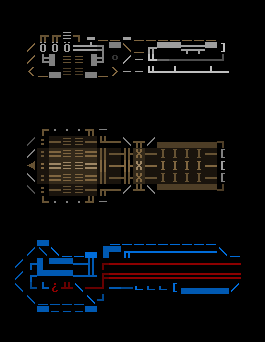
cogmind_ascii_art_beta11_heavy_cannons

Extra-heavy, extra-large heavy variants of existing cannons created for Heavies.

Mechanically speaking, the star of their loadout would be the other part added specifically for Heavies, namely the Active Sensor Suite which I detailed in an earlier article. This plays an important role in service of their area denial capabilities, since they can use it to accomplish two powerful AOE effects:

  1. Call reinforcements: Unidentified signals detected within their sensor range are considered suspicious and they’ll eventually take action against them by summoning a squad to check out the area. Up to two separate such squads can be active at once, so spending too much time near a Heavy without actually engaging it could be problematic in the long term.
  2. Mask allies: All of the Heavy’s combat allies within its sensor range are masked from detection by normal sensors, making it somewhat more dangerous to approach them, not knowing whether a regular patrol is passing through, or where summoned reinforcements may be lurking. Cogmind can see through the masking if using their own Active Sensor Suite, FarCom, or a relevant RIF ability, but those are special options many builds won’t necessarily have access to or want to take advantage of and therefore have to consider the threat of masked enemies if relying on sensors (builds not using sensors anyway simply won’t care about this aspect :P).
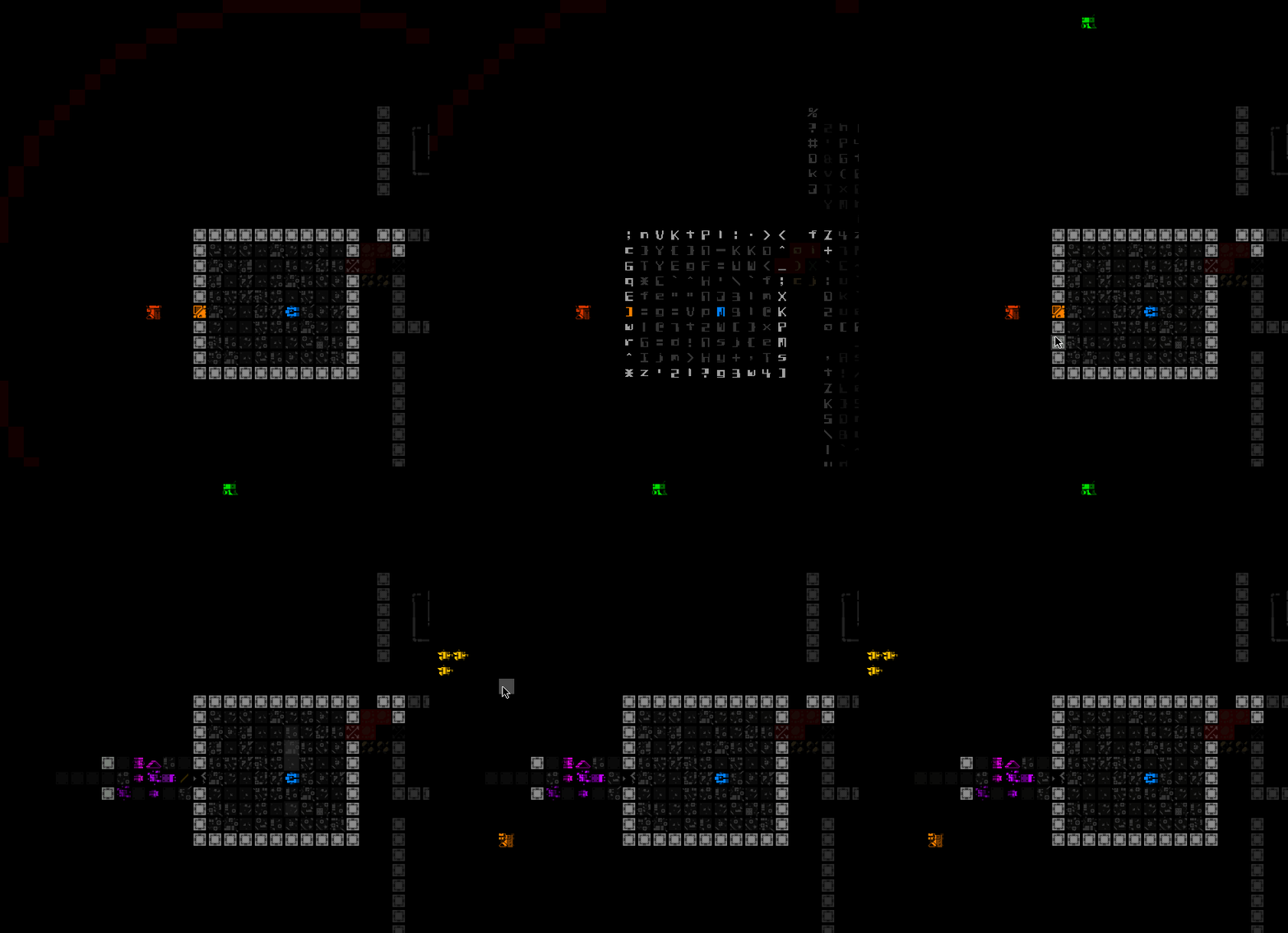
cogmind_heavy_class_destruction_sensor_reveal

Destroying a Heavy here shows what their sensors were masking.

Here it’s important to bring up several of the QoL mechanics that round out the Heavy experience.

First of all, as soon as Cogmind enters the Heavy’s active sensor range, its exact position is revealed on the map. This is important for balance, since projecting their location lets players plan for how to approach or traverse the area, if they want to at all. Heavies are fun challenges, but would be a lot less so if they didn’t reveal their location! This kind of mechanic also logically falls in line with the idea of “active scanning.”

Heavies don’t just pop into view, either, instead animating their full sensor range around them on the map as a prominent warning.
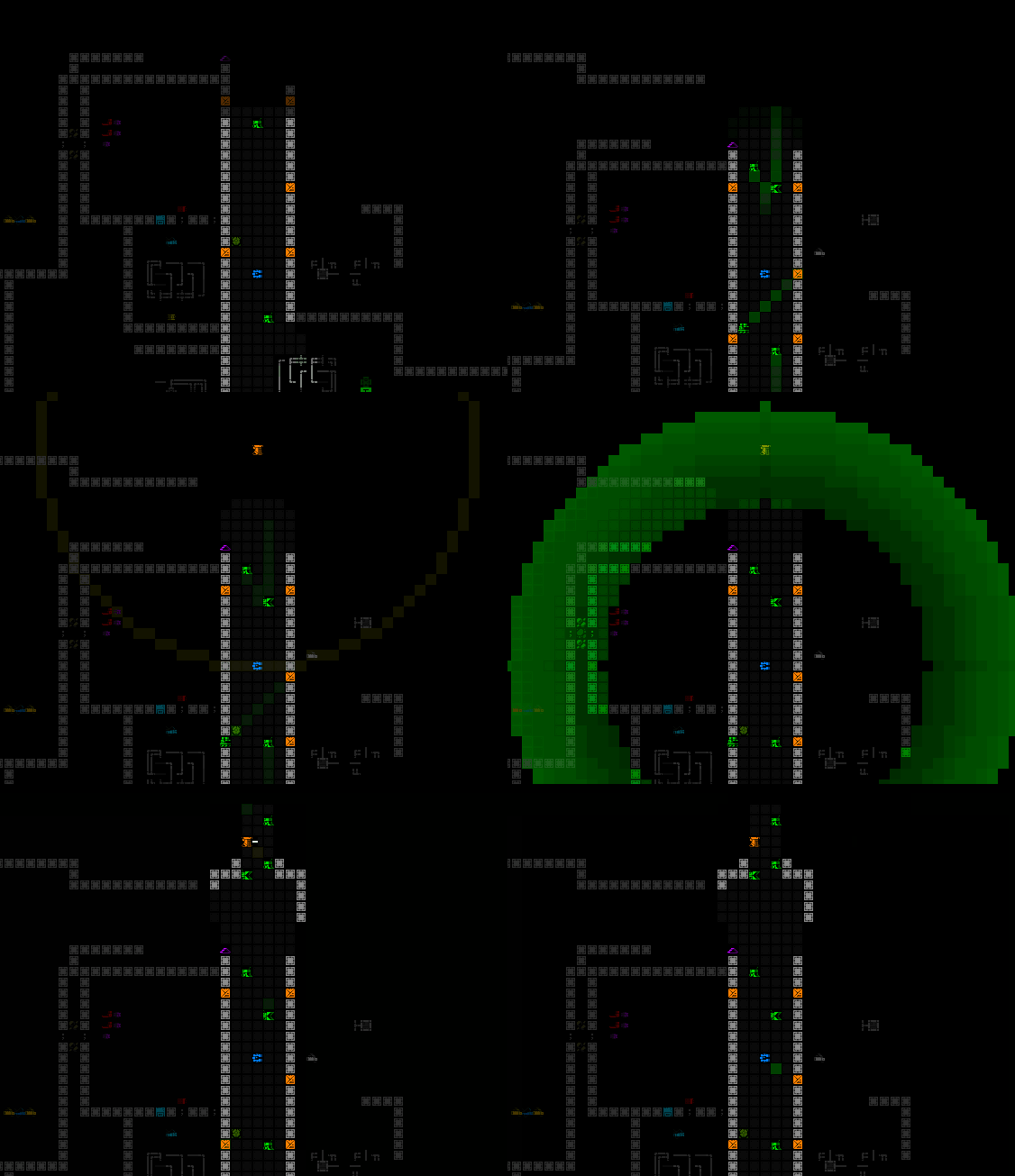
cogmind_heavy_class_active_sensor_array_warning

Heavy Active Sensor Suite AOE warning animation.
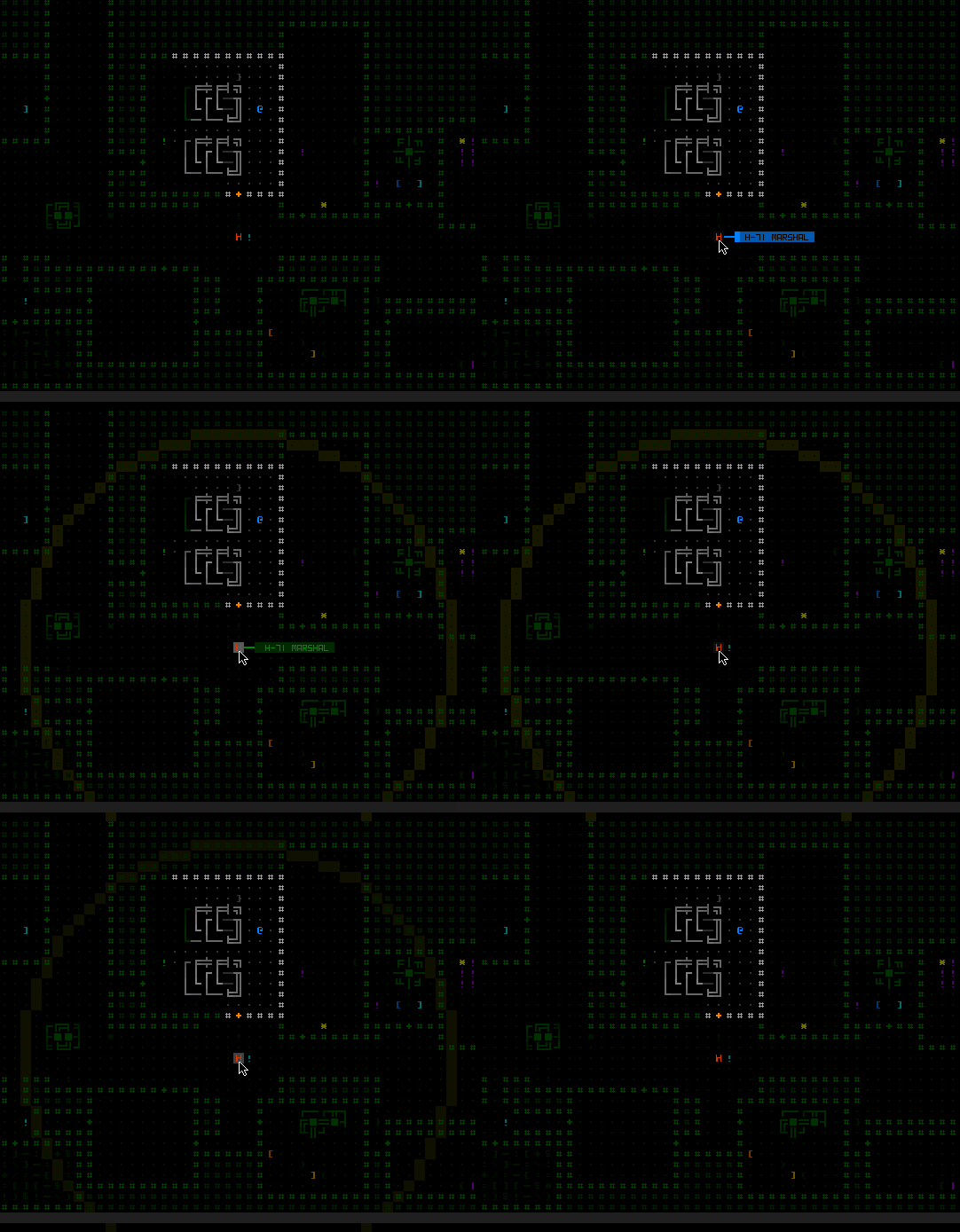
 

cogmind_heavy_sensor_range_recall

Holding the cursor over a known Heavy will also recall that range for reference.

Another important piece of info clearly telegraphed to aid planning is the timing of relevant squad dispatches, which we’ll get to further below.

Summoning

Tangling with a Heavy, or even passing nearby, is cause for concern because it’s hard to be certain just how far such an encounter could escalate (unless you’re really confident in your tactics). After all, they’re going to call for help, which means more enemies, more danger, more alert (also more loot, for players into that type of salvage!).

There are actually two kinds of reinforcements available, the first being those sent out to search for the source of the sensor blips, and another which the Heavy calls to its side as soon as it comes under attack. Heavy behavior is rather unlike other combat bots: since it can rely on allies to go after potential targets while it holds its ground, it therefore doesn’t need to chase them down on its own, but may also want additional protection capable of reacting to visible threats against its position. This mechanic makes it more dangerous to attack a Heavy without fully committing right away, since there will definitely be another squad arriving to fortify the area at some point. This “close defense squad” is composed of more typical front-line combat bots, different from the types sent after enemies (like Cogmind) detected on sensors. (Like most other calls for reinforcements, the Heavy can also be jammed with a Transmission Jammer, which again they happen to also use themselves so become a source for a second type of salvage that’s useful against them.)

Note that none of the reinforcements summoned by a Heavy actually go after a specific target until they spot one, they’re just sent in to reinforce the area, emphasizing the area denial aspect by increasing hostile bot density in the local area.

Regardless of the type of dispatch, all of them are announced, and in the case of reinforcements targeting sensor blips, they’ll even specify the type of squad sent out because Heavies don’t react in the same way to every signal!

cogmind_heavy_sensor_reinforcements_announcement_cutter

This Heavy is calling in… Cutters?!

Over time Cogmind has been trending towards more dynamic responses to different play styles, especially the significant difference between fast and slow player builds. Thus a Heavy that detects an unknown high-speed bot on their sensors is more likely to send out faster bots to intercept it, or if the target is slow it’s better to call in slower bots carrying heavier firepower.

The bot of choice to go after slow targets? Specialists.

Specialists

Specialists are an unusual case in Cogmind, relatively underused despite falling under the “common” (non-prototype) combat bot umbrella. They could sometimes be found in Garrisons or attached to assaults, but otherwise weren’t a part of regular patrols/reinforcements/investigations, at least not until now :)

There were also only three variants and that wouldn’t do for reinforcements meant to support Heavies across a large number of depths and situations--simply not enough variety and too predictable in terms of their capabilities. We’re going to need more variants, so I more than doubled it to seven.

Specialists also got unique depth-spawning rules, made possible as a result of being the only bot with a different variant for every level on which they might appear, and desirable especially due to the unique nature of their loadouts. Unlike other bots that have consistent loadouts across all their variants (e.g. all kinetic weaponry and relevant supporting parts), each Specialist has a mostly unique loadout aside from the common theme of “legged combat bot,” building around a different damage type or combat style. And unlike other bots which use the same predictable variant at each depth (the highest one rated at or below that level), Specialists are now selected randomly from among any variants at, directly above, or directly below, the current level. So there are up to three possibilities for a given squad. (A single squad of Specialists will all be the same type, however, to avoid mixing them and making them hard to visually distinguish during an engagement--Cogmind the game is mostly intended to have predictable enemy loadouts known purely by looking at a robot’s ASCII on the map without a need to further examine details once you’re familiar with them from previous runs.)
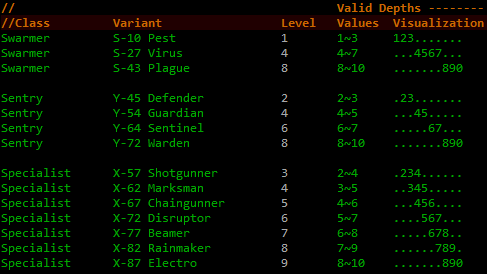
cogmind_robot_variant_distribution_sample_specialists

Sample chart showing how some class variants are normally distributed by depth, and how that compares to Specialists. Notice the overlap, more easily seen using the visualization. (“Level” 1 refers to -10/Materials, and goes up from there to -1/Access which is equivalent to level 10.)

As you can see above, Specialists may spawn slightly OOD (out-of-depth, giving access to better loot if you take them down!), or even slightly weaker, and this approach is perfect for the job here with regard to Heavy reinforcements since you can’t be sure what the variant will be, and therefore not exactly sure whether or not it’s a variant you’re better equipped to deal with. This again makes hanging around near Heavies a bit riskier, or at least more interesting :)

These unique selection rules apply to all Specialists wherever they may appear, meaning they’re also good for convoy defense variability, since those may be accompanied by Specialists, too, as well as Garrison interiors.

But Specialists certainly aren’t going to cut it when it comes to chasing down fast movers--for that we now have Cutters!

Cutters

Wow, all those years without any new common 0b10 combat classes and now we have two at once! I’ve added a second class of bots specifically to play a supporting role for Heavies, aiming to give faster player builds more of a challenge with this one. For a little flying bot it sure took a while to put these guys together, involving a range of new parts and multiple new AI features.
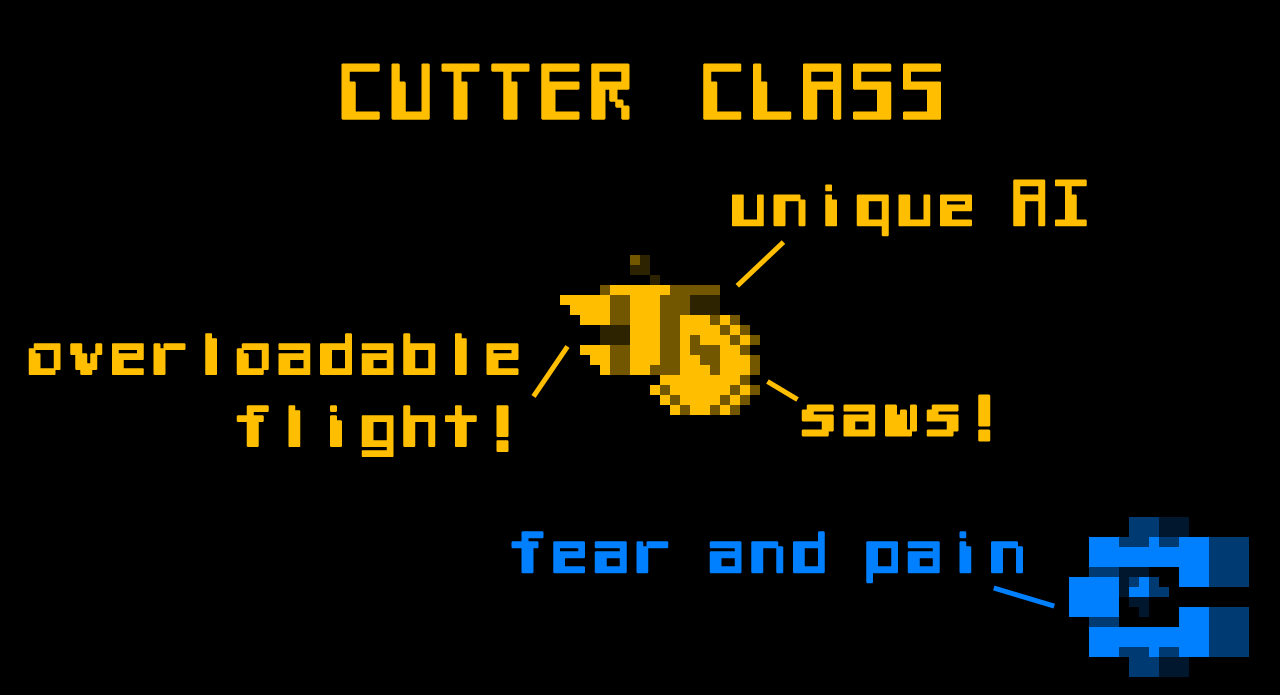
cogmind_cutter_class_tile

Cutter class tile. The ASCII version is a lowercase ‘c’. (Image originally put together for one of my YouTube videos on this topic :P)

Of course if you want to catch fast targets you probably want to be fast yourself, so the Cutter class is blazing fast, or at least can be. To accomplish this it’s the first AI capable of selectively toggling overloadable flight units. Cutters normally move at their propulsion’s base speed, but as soon as they have a known enemy they’ll overload and chase at a speed that only the fastest builds would be able to outrun.

In designing robots there’s always the important consideration of what players will do with the salvage, so in this case because I didn’t want Cutters to be a reliable source of widely desirable overloadable flight propulsion, I had to add a new set of parts with their own drawbacks. Enter “Surge Thrusters,” a rather different kind of flight propulsion which while overloadable and quite fast, also has higher integrity and coverage, lower mass support, and burns out faster than the usual overloadable airborne prop. Surge Thrusters can theoretically be useful in a pinch or as part of some specific strategies, but the average flight build will pass.

Another reason Cutters need speed is that they are primarily melee fighters that need to actually close the gap with targets before being blasted to bits. They’re built around a saw, which sounds as scary as it is with its very high slashing critical effect. Maybe one is not too bad, but having several of these bots racing towards you can be pretty scary and cause for emergency measures.
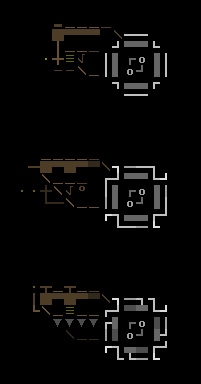
cogmind_ascii_art_beta11_saws

A range of saw variants created for Cutters.

Cutters also have a single-fire ranged option they’ll use on first sighting a target, one that also involved adding a new mechanic: AOE knockback.

Explosions in Cogmind don’t normally move bots, since as neat as that would be it would also make using them (or having them used against you) even more chaotic, further interfering with the planning that goes into the tactical positioning behind success during Cogmind encounters. But this is a special case where we can make an exception since that’s part of the intent…

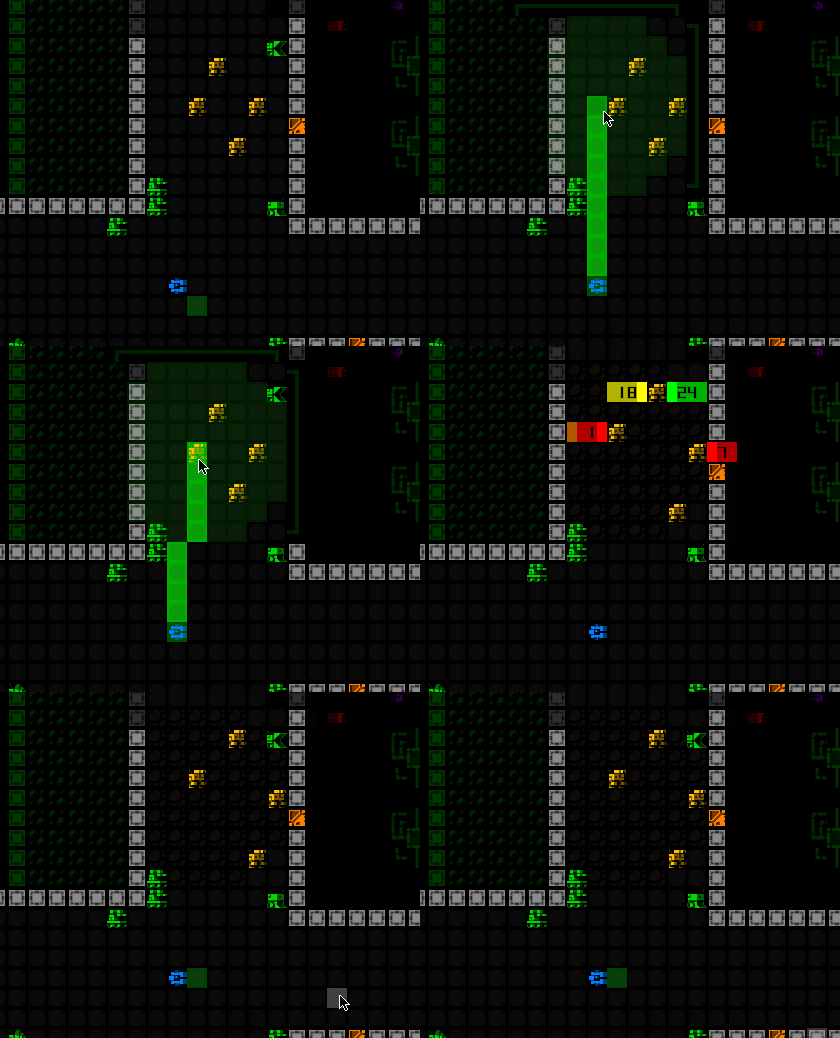
The first application of this mechanic is the Cutter’s short-range “Concussive RPG,” which is hard to aim and doesn’t inflict much damage, but knocks targets away from its origin to disorient them, and due to the poor targeting the projectile may likely even miss and could knock a target back closer to the Cutter’s position!
cogmind_concussive_RPG_AOE_knockback_demo

Firing a basic Concussive RPG. More powerful variants have more significant knockback effects.

The RPG projectile itself (not the resulting blast) is also the first in Cogmind to do ranged impact damage, which is also quite scary for flight players since it’s more likely to smash fragile systems, although actually scoring a direct hit on an evasive target with such an inaccurate weapon is not very likely.

Again with the salvage concern, we can’t really have players repeatedly firing a reliably accessible AOE knockback weapon like this, hence part of the reason behind its design as a single-use disposable launcher, though this approach also happens to be more appropriate for Cutters themselves anyway since their priority is obviously to cut things :D

This part of their loadout required yet more new AI behavior tweaks to enable them to effectively use a disposable launcher and switch weapons when appropriate, in addition to taking special care to avoid firing while too close to a target, or with other Cutters nearby, lest it become easy to deal with an entire squad of these by letting them get in your face and tanking the first shot so they just kill themselves :P

The Cutter design was inspired by the Striker prototype, which also has a two-weapon design based around firing several shots of its Compact Linear Accelerator at long range before rapidly advancing to engage a target with its Plasma Lance, though internally the Striker was much easier to handle since there’s no AOE effect to consider, and getting them to switch weapons was as easy as making sure they’d run out of matter to fire their accelerator after X shots. (Strikers are similarly an anti-fast-bot design, though much beefier and not quite that fast.)

Heavy Placement

Where and how frequently these new Heavies appear is a vital part of how effective they’ll be at making exploration more interesting. Too few and they don’t add any of that meaningful and challenging area denial effect, too many and that would be a problem since the idea is that there are usually supposed to be ways to circumvent them if desired/necessary (though again this sometimes comes at the risk of being forced to do something else dangerous--hard to say!).

Heavy presence is not really a thing until the mid-game. Early-game maps are relatively small by comparison, so only a couple maps down there contain a single Heavy. There and even on into the mid-game you might even go a few floors without ever seeing one depending on how much you explore. More importantly, within a single map multiple Heavies will not be stationed near one another, since as one can imagine even just having their sensor ranges overlap could theoretically be an incredibly dangerous place where multiple reinforcement squads could converge more quickly than usual.

In terms of bot quotas, Heavies were not included as raw additions to the original inhabitants of each map. Instead they are replacing some of the Sentries originally stationed on a map, and similarly guard junctions or exits (but not individual rooms like Sentries might).

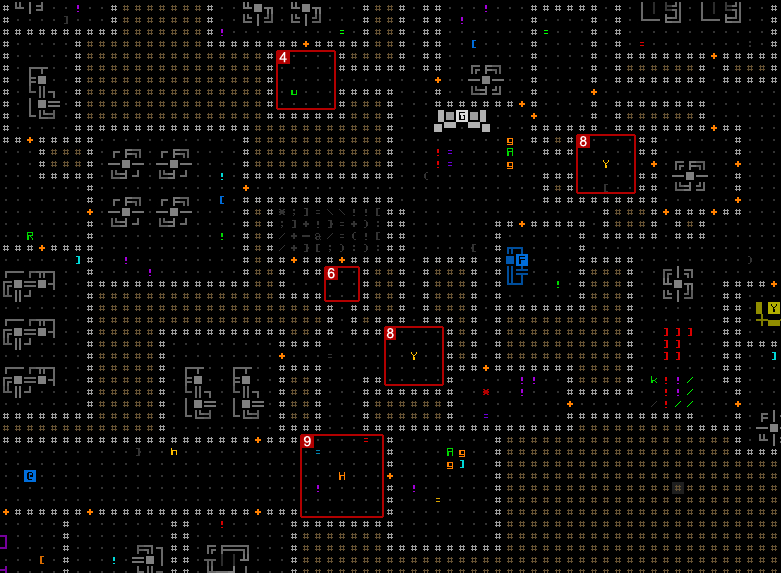
Heavies are usually placed in high-value junctions, potentially giving them a good vantage point for keeping watch over long corridors to make best use of their visual range and heavy cannon, or at least a position connected to multiple paths from where it makes sense to intercept hostile signals.
cogmind_factory_junction_rating_sample

Local map junctions labeled with their relative value (see “Desire Paths” for a Robot World for more about junctions). Notice how the highest-rated junction in this are contains a Heavy (‘H’), while two others are guarded by Sentries (‘Y’).

Heavies may also sit right on an exit--good luck circumventing that one if your goal is that particular exit! (just kidding, there are lots of strategies available, but naturally this complicates things)
cogmind_heavy_class_distribution_sample_with_sensors_factory6

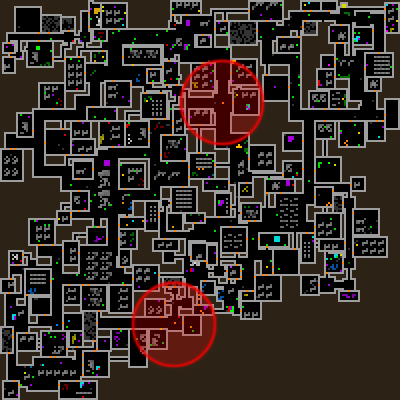
Sample default Heavy distribution on an earlier Factory map (-6), with circles representing their active sensor range coverage. Not too bad here, as there are clearly many other optional paths, and these two may never even be seen at all depending on Cogmind’s route. Both of these are guarding junctions rather than exits.
 

cogmind_heavy_class_distribution_sample_with_sensors_factory5

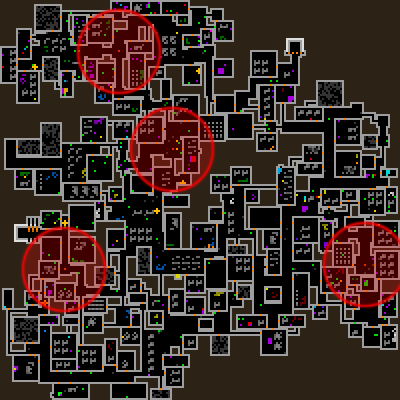
Another Heavy distribution map including sensor coverage, this one a -5/Factory layout with somewhat higher Heavy density. These also happen to be only guarding junctions.
 

cogmind_heavy_class_distribution_sample_with_sensors_research3

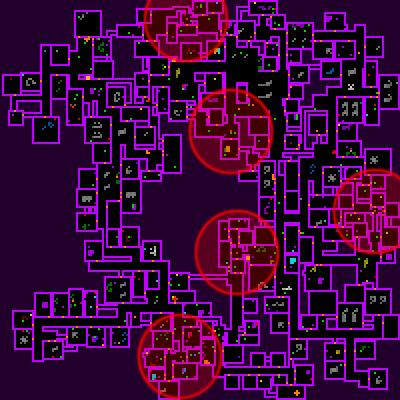
This Heavy distribution scenario on -3/Research could be a bit more problematic, not unlikely on Research maps since they tend to be more maze-like and have more bottlenecks. Being forced to pass near or directly engage a Heavy is more common in the late game. The Heavy stationed at the top there is guarding an exit to the next depth.

Notice how none of the Heavies are too close to one another, and there are ways around them but they stand as obstacles on some paths.

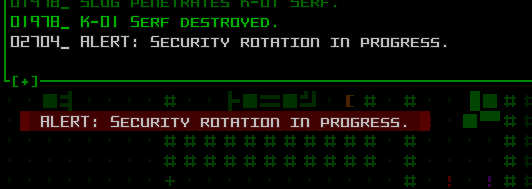
An exception to rule ensuring each Heavy has its own mutual exclusion zone is a new 0b10 event meant to further spice up the main complex: Security rotation!
cogmind_security_rotation_announcement

ALERT: Heavies on the move!

Every so often Complex 0b10 will call for a security rotation, in which all Heavies will cycle to one of the other Heavy locations (and coincidentally any Heavies found to have been destroyed since the last rotation may be replaced by a new one dispatched before long).

While this can create extra danger in the form of a powerful bot on the move, and even more so when more than one Heavy might be moving through the same area (!), it might also open up a window of opportunity to slip through an area previously overseen by a Heavy.

Of course it also helps that you can always see them while they’re taking part in a rotation, due to their active sensors, thereby making planning a route past them, or evading their approach, that much more possible even without your own sensor data. From a design standpoint this is another part of their appeal, giving players a critical piece of information needed to help face a challenge, without solving the entire problem.

Aside from the above predetermined defense points, Heavies also star in Complex 0b10’s new cargo convoy interception response mentioned in the previous post, where “Access Lockdown redirects Heavy bots posted at junctions to exits across the map, and if necessary calls in additional Heavies to defend any other unprotected exits.”

Player Reception

In general players are loving the addition of a Heavy class, as its serving to spice up the main maps by making them even more dynamic and challenging on an intermediate level we didn’t really see before. We’ve always had “low-level” stationary enemies and roaming patrols that require LOS on a target (or a corresponding alert) to go after it, and “meta-level” extermination and assault dispatches with accurate long-distance tracking, but nothing quite like Heavies, occupying a space in the middle of that spectrum in the form of an enemy that can use sensors to more effectively control an entire area.

I’m really happy with how they’ve turned out!
Posted in Cogmind Beta Overhaul | Tagged , , | Leave a comment

Spicing Up Primary Maps 1: Cargo Convoys

One of the core principles of Cogmind’s original level design was to split the world into two types of areas: the main complex vs. branches. I wrote about this concept here on the blog shortly before Cogmind’s first alpha release, but one function of this approach is to provide a tamer more predictable central route to the end game, one containing plenty of challenges but overall few to no extreme surprises other than what trouble the player stirs up through their own actions (and also little to no intrusion by the story). Branches, on the other hand, are generally more dangerous while also offering significantly better rewards and even whole new play styles.

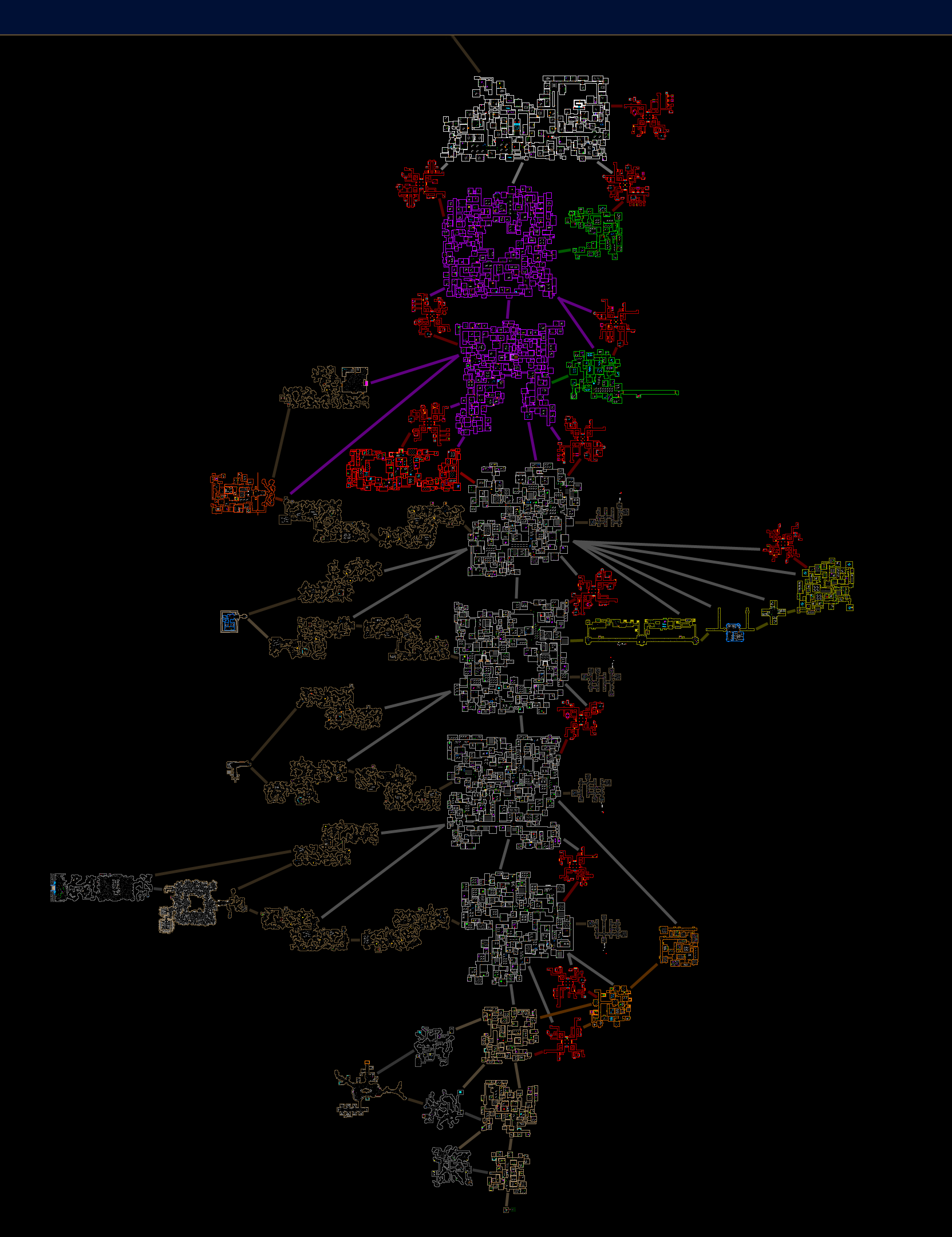
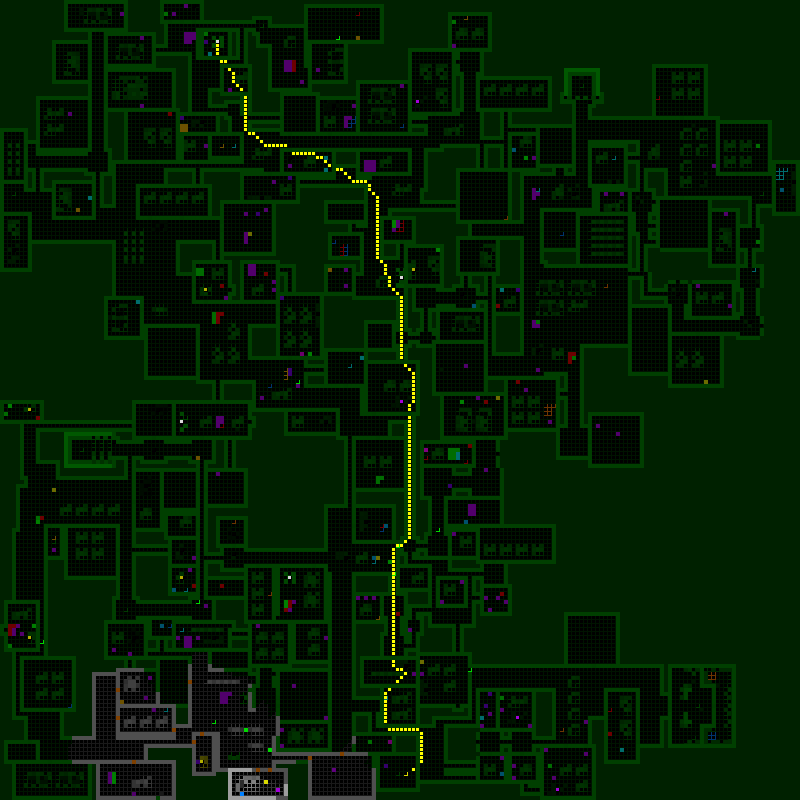
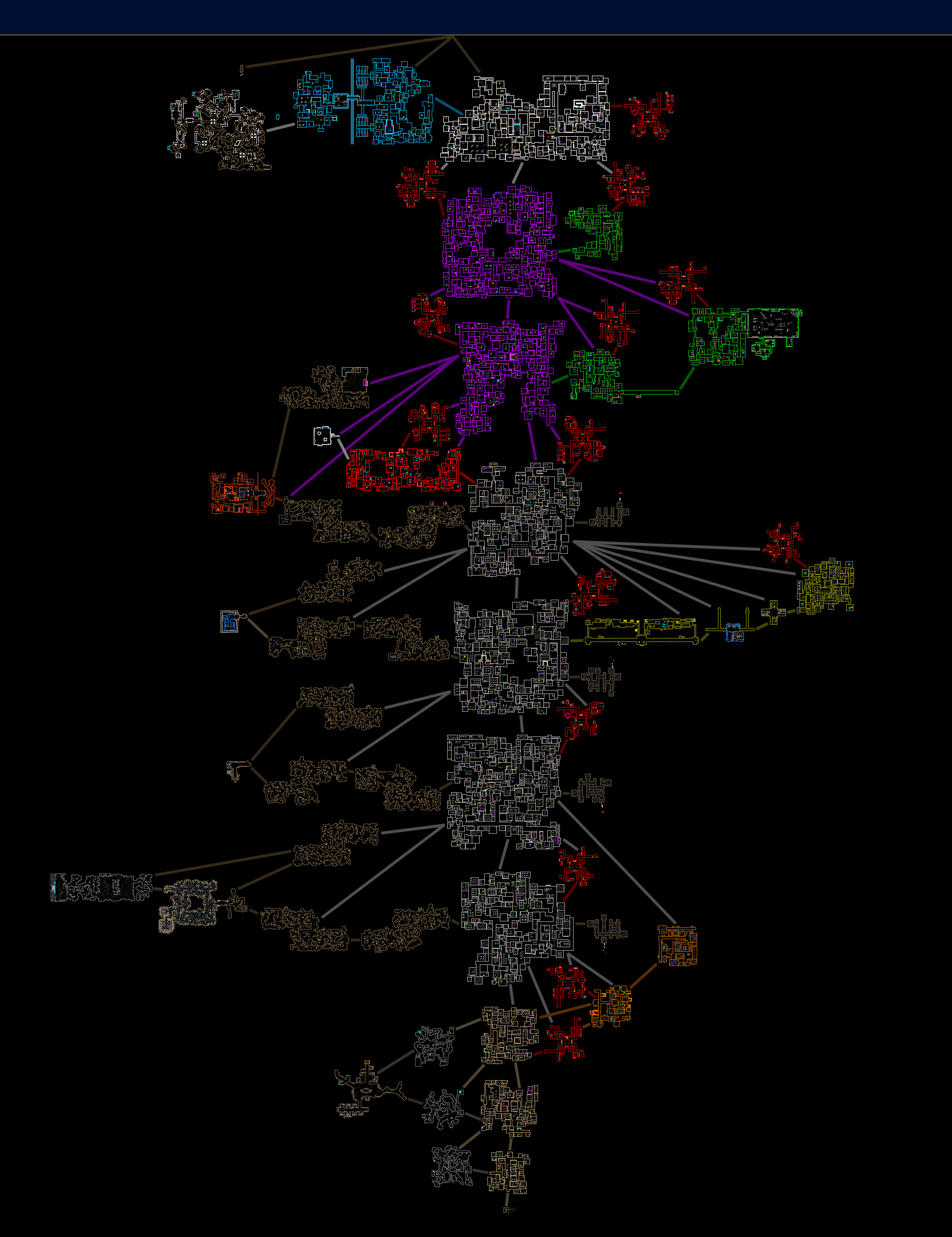
cogmind_pixelwise_world_map_no_redacted_spoilers

For fun I put together a world map of Cogmind in which each pixel represents one cell. Many direct branch links can appear at more than one depth (and in a few cases there are even shortcuts)--this just shows one set of possibilities, and in the version above I have removed highly redacted spoilers, meaning a number of maps are missing at various depths, but it shows the split between the main path (central column of larger maps) vs the branches linked out to the sides. You can download the full-size image to examine it more closely, or if you don’t mind FULL SPOILERS you can download this version which includes even secret redacted-level areas.

As a result of this division, the main complex will seem a bit same-y compared to the variety offered by branches, but it accounts for a minority of the total area of the world, and one’s route is optional after all, so there’s always plenty of opportunities for adventures into branches. Again, by design the main complex maps are intended as a sort of “hub-like” area where you can relax your mind a bit because there aren’t unique threats all over the place--it offers relatively consistent types of challenges regardless of depth, conducive to planning and preparation for those riskier branch excursions.

They are, however, the largest maps in Cogmind’s world, and with so much room to play with and the main game long complete now (who cares about version numbers :P), as we start to expand into really optional dev territory I think it’s time to consider new options for “sprucing up the main complex.”

Primary Map Events

Technically from early on we’ve had several small-scale surprise/random events that can occur in the main complex, but these are mostly rare encounters that only people who play a lot will ever see, sticking to the original goal of keeping that sort of content from becoming the norm in the main complex. This category includes Derelict or Assembled incursions of various types, among other faction activities.

Also of course there are some major player-triggered plot-related events initiated via branches, but those don’t really count in this context.

Cogmind Beta 11 is adding an event that belongs in a whole new category of its own, which can be summed up as essentially “optional high risk-reward content moving through the main complex.” Compared to the other types of events mentioned above, this new one is the first reliable risk-reward event that everyone can encounter, and the fact that it’s mobile rather than requires being at a specific point on the map gives it a further unique slant.

Introducing “cargo convoys”…

Cargo Convoys

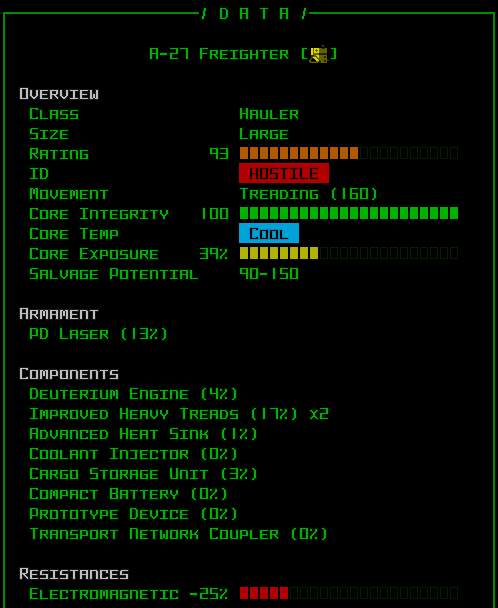
Convoys are centered around the A-27 Freighter, a new Hauler variant which is itself based around the new Cargo Storage Unit introduced with the Beta 11 storage overhaul.

cogmind_freighter_info

A-27 Freighter stats.

Haulers (affectionately dubbed “loot piñatas” by players) are normally green non-combat bots ferrying parts around the complex, sometimes escorted by Grunts. Ambushing one in a direct attack without immediately destroying it generally results in reinforcements being sent to the area, but most of the time it’s not all that dangerous to intercept a Hauler and hope it’s carrying something useful (or targeting it precisely because you already know it is ;)).

Freighters are a different story, only dispatched as part of a special convoy containing a huge inventory packed full of Definitely Very Good OOD parts.

cogmind_inspect_freighter_inventory_via_mTNC

Examining a distant convoy’s inventory via a Modified TNC borrowed from the Exiles.


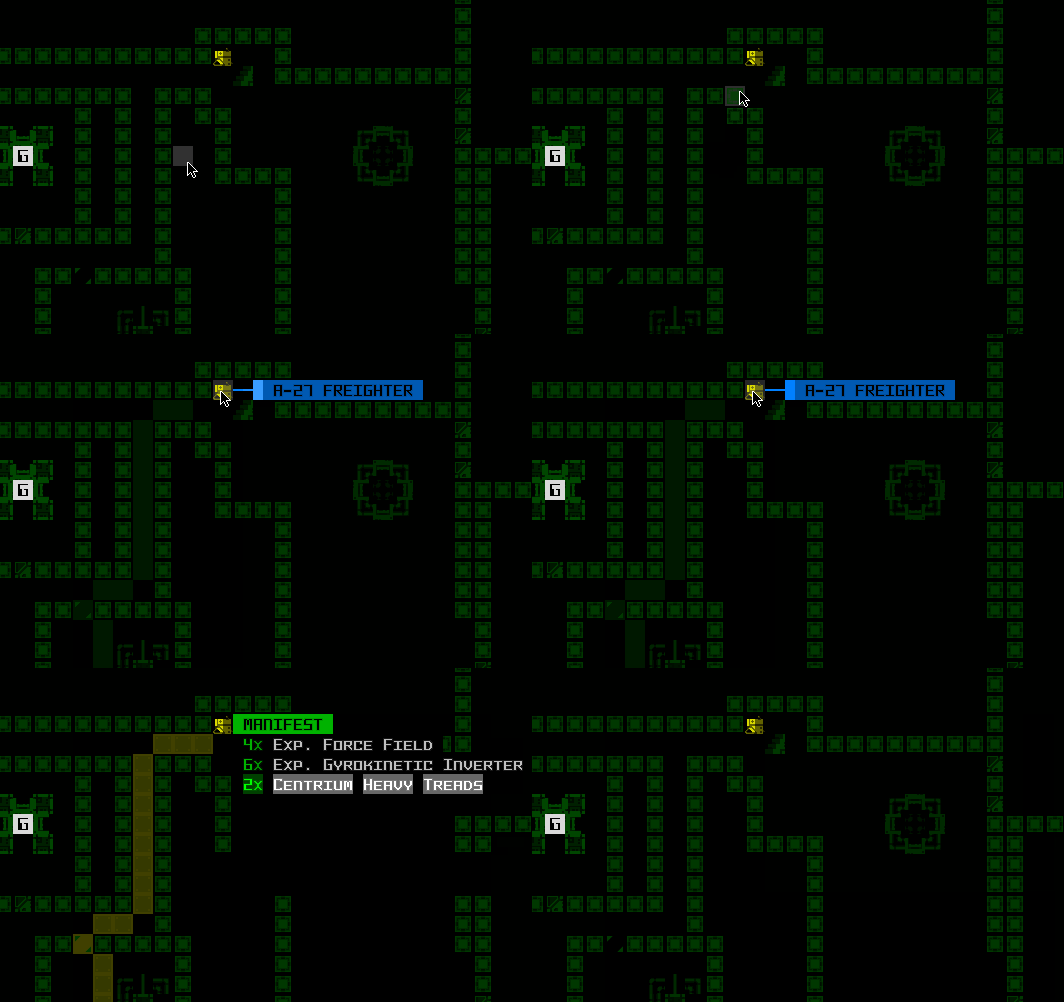
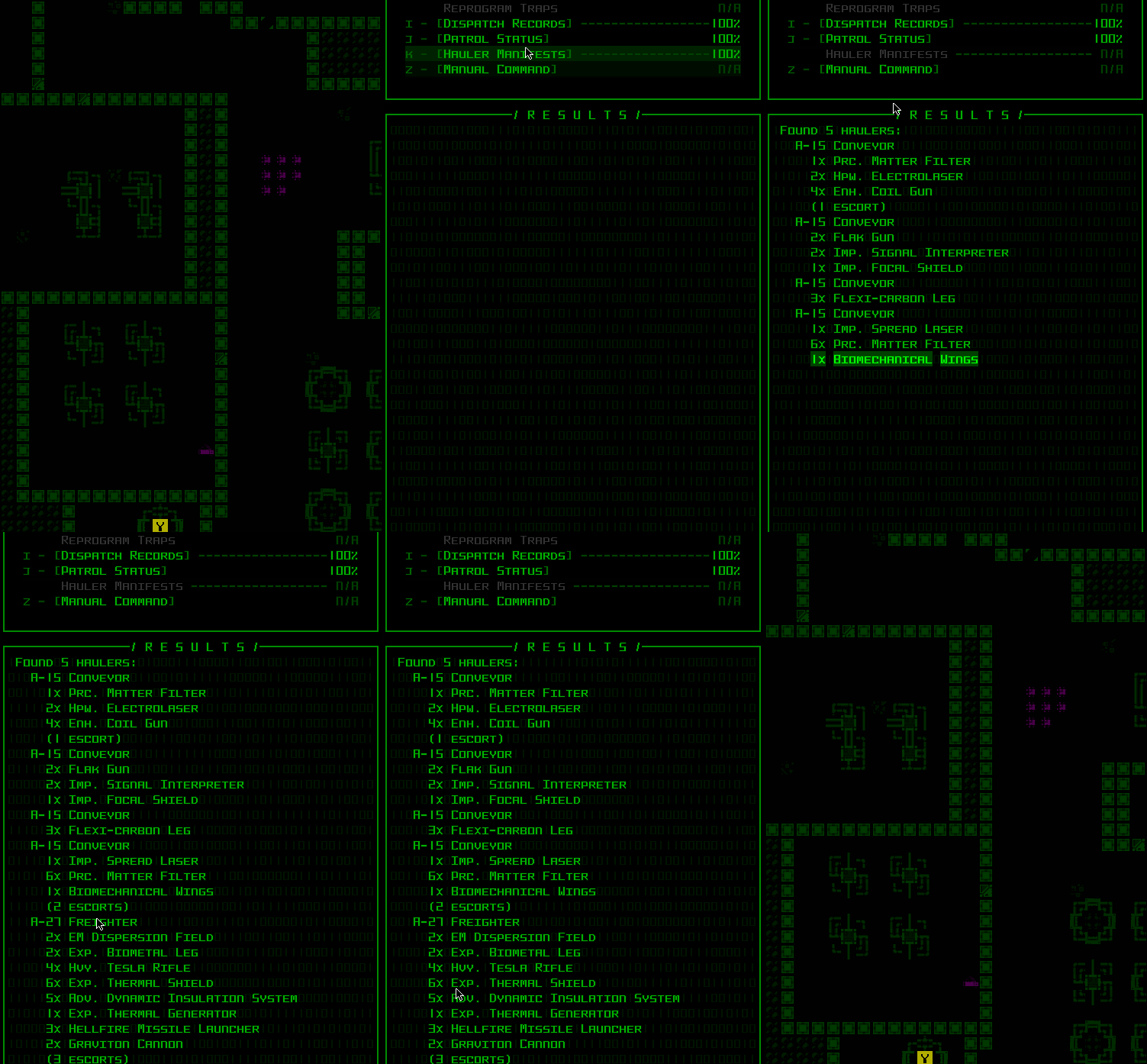
If convenient one can also hack a terminal to pull the convoy’s manifest to decide whether it might be worth intercepting.

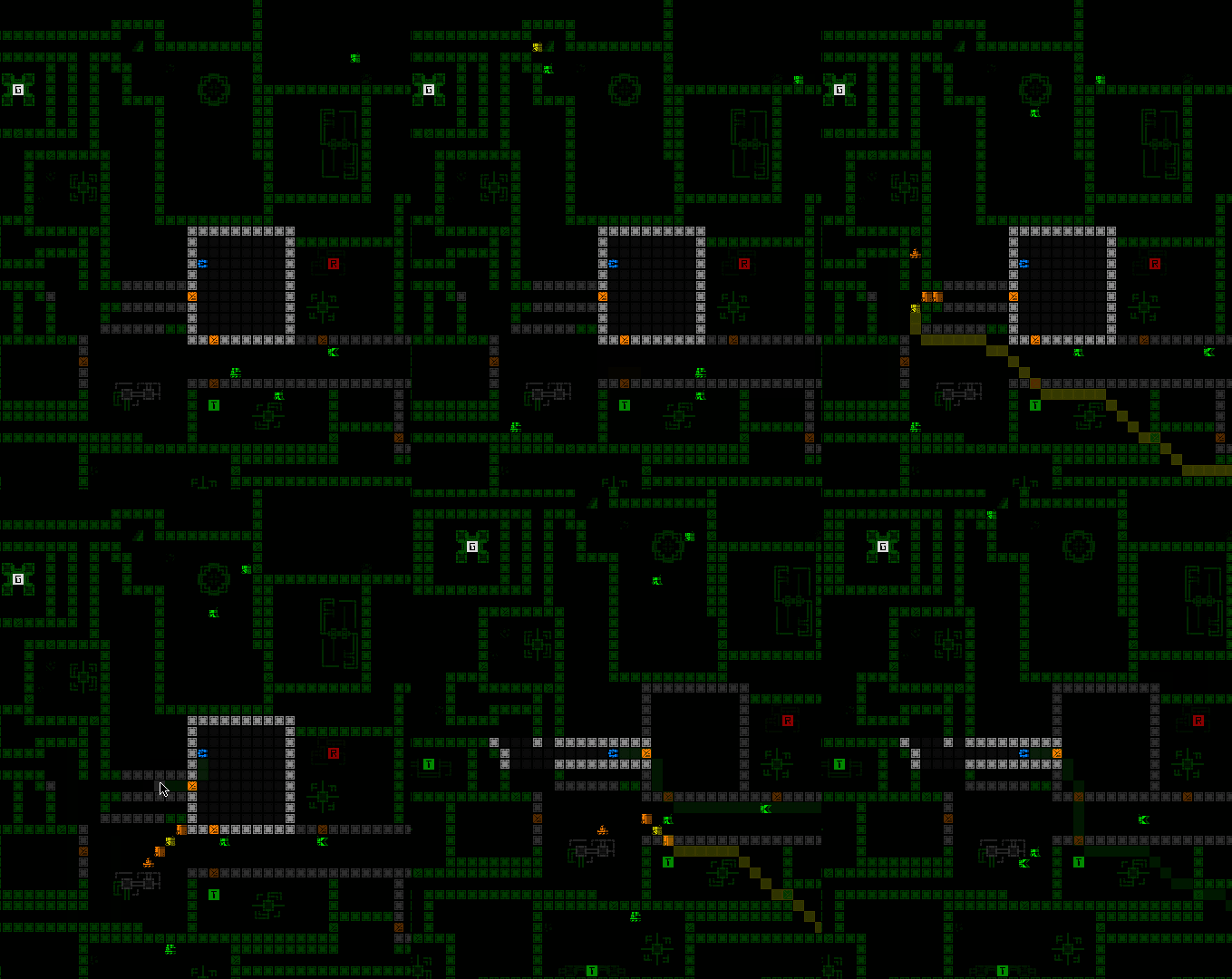
Although Freighters still flee when attacked, unlike other Haulers they are armed with a close-range weapon for defensive purposes, thus instead of using the normal green color they appear yellow, earning them the nickname “yauler” (yellow hauler) from players.

The yauler itself isn’t all that scary, since even with high core integrity it moves relatively slowly and can’t fight back at normal ranged combat distances, but anyone interested in intercepting a cargo convoy is usually going to have to deal with the escorts, which are decidedly more problematic.

Shadowing the Freighter are two ARCs (Carriers) and a Protector class bot to shield them all. The ARCs are quite a significant concentration of power since they’re even deadlier than high-security assault forces, each carrying four dangerous bots including a range of possibilities (even Specialists) and making for high variability in terms of capabilities. On that latter point, one of the risks of engaging any ARC is that until it opens you can’t be sure what type of combat bot(s) are inside, and therefore may not be able to as effectively plan for that part of the fight in advance.

Anyway, it’s a lot of firepower (and defenses!), so high risk, high reward.

Some Freighters may even be hauling a seriously good piece of unique tech that can only be found on convoys, something I’d probably like to do more with in the future but for now haven’t added more unique parts for that purpose, just one so far to entice and reward would-be hauler robbers.

Telegraphing

So you have this concentrated deathball of robots making its way across the map, one can imagine how nasty it would be to turn a blind corner and be staring down one of these convoys… Okay earlier playtesters indeed reported this sort of tragedy which led to various refinements ;)

While running into a convoy when you least expect it or want to is always going to be entirely possible (SURPRISE! *cue volley of gunfire and lasers*), there are a number of things we can do here to make them a better experience overall while still preserving their unique challenges.

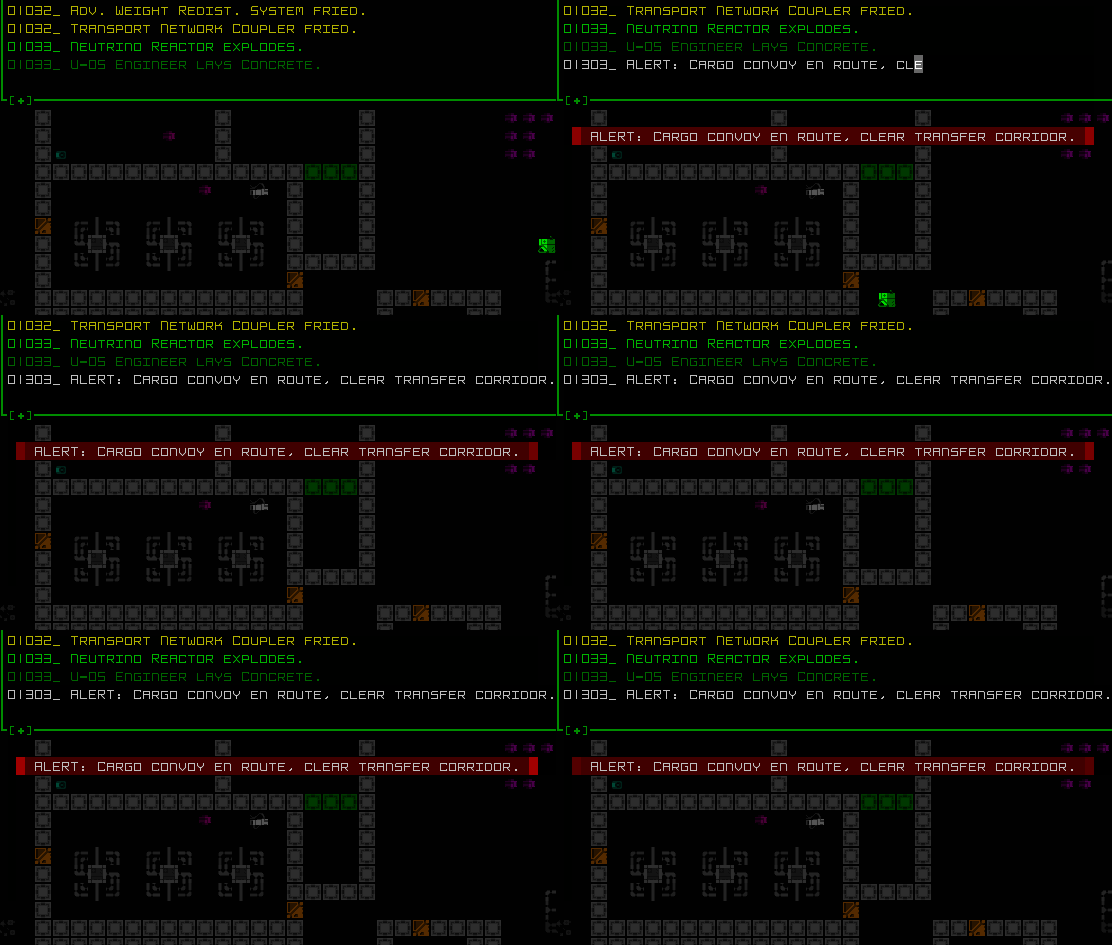
First of all there will only ever be one convoy on the map at once, and its impending arrival is announced in advance in the form of an ALERT message.

cogmind_cargo_convoy_alert

Cargo convoy alert warning of impending Freighter dispatch.

For fairness, the convoy’s entry point also won’t be near the player, and before the convoy itself is dispatched, a group of Swarmers is sent out to clear the “transfer corridor” as mentioned in the above alert. As implied, this means they’ll follow the intended convoy path to ensure there are no threats ahead (which may include Cogmind :P), and observant players seeing these guys on sensors will know something is up since they move at full speed, which is normally something Swarmers only do when chasing down targets. So that’s one way to get a glimpse of where the convoy will be headed. (Or even just running into a squad of Swarmers after the announcement is sufficient to be suspicious.)

Convoys may also be detected through a variety of other means that require proactivity from the player, such as of course regular robot/visual sensors and bot tracking methods, or installing a particular Hauler-tracking Trojan, or using various other forms of intel.

One of the more widely available options on shorter notice is to salvage a Transport Network Coupler from any Hauler and use that to pinpoint the Freighter, and as an added bonus the TNC will even show the entire planned cargo route, making it easier to set up an ambush or (avoid the path entirely).

cogmind_cargo_convoy_on_sensors_with_route

Using a combination of sensors and TNC to watch a squad of Swarmers then the convoy pass by, while also able to see the route they’ll take.

Cargo convoys do leave the map once they reach their destination, either a Garrison Access or 0b10 map entrance somewhere else on the map (usually far from where they entered so they’ll cover more ground).

cogmind_cargo_convoy_factory_route_sample

Highlighting a sample cargo convoy route across a Factory map

Of course even without any of these methods one could just generally be careful when there’s an active convoy out there--this knowledge affects how one might decide to path through rooms and corridors on the off chance you could run into such a large force. The likelihood of an undesired encounter also changes depending on general map layout, where routing through apparent bottlenecks increases the chance of meeting trouble (although this is always true regardless of convoys!).

Player Reception

Aside from early testing hiccups like being jumped by an unexpected convoy arrival (which were also more frequent at the time to allow for more encounter opportunities), players generally like the concept. Convoys add interesting new possibilities to the main complex, tapping into a bit of that risk-reward element more abundant in branches. It’s the type of addition multiple players have expressed a desire for over the years, but as mentioned earlier I’m only more comfortable working some of it into the game now.

It’s nice how many interesting tactical options there are for confronting a convoy, each with their own benefits and drawbacks, be it of the stealthy, hackish, or destructive approach. Part of the challenge comes not purely from having to deal with the escorts, either, but the Freighter’s high core integrity making it harder to quickly destroy and thereby increasing the difficulty of doing so without taking too much damage from the escorts, or instead prioritizing the escorts while the Freighter itself gets away during the battle.

That it’s a mobile event also makes the encounter even more dynamic and therefore more challenging to pull off a successful ambush, but doing so is usually quite rewarding, and not even just for the cargo since salvaging the powerful escorts can also net some nice parts.

Below is my test run of the Beta 11 prerelease in which yaulers were introduced, the first encounter I think is the one at 1:56:23. We met several on that run, and they were interesting but I didn’t do all that well with them :P

[Spoilers]

The following section/remainder of the article contains spoilers but is relevant from a design standpoint so I’m including them here with a notice in case some readers want to just experience this stuff in game.

Cogmind isn’t the only one who might want to stop a cargo convoy in its tracks. Players will be familiar with a particular warlord capable of sending in forces to intercept the whole bunch. This potential event doesn’t have anything to do with Cogmind directly, though Cogmind can technically benefit from it by looting the battlefield since the odds overwhelmingly favor the ambushers.

I added this as a way to occasionally give players some free rewards if they know where the convoy went down (or get lucky enough to happen across it before everything is cleaned up!).

Also it’s intriguing when a global ALERT pops up reporting that the convoy is under attack but the player maybe isn’t anywhere nearby :P. Just another way of reinforcing that the world goes on without Cogmind and keep players wondering until they discover why.

Of course, even if Cogmind wasn’t involved in the ambush (but hopefully got something out of it regardless xD) they still may have to deal with some of the fallout, which involves a new type of response by Complex 0b10, one that I may also use for future situations but this is the first and only one so far. “Access Lockdown” redirects Heavy bots posted at junctions to exits across the map, and if necessary calls in additional Heavies to defend any other unprotected exits.

What are Heavies? Well that’s a topic for later ;)

(Update 210928: Read all about Heavies and their design in Spicing Up Primary Maps 2: Area Denial.)

Posted in Cogmind Beta Overhaul | Tagged , , | Leave a comment